
Weddings
How to Have a Meaningful Parent Dance When Your Parent Can't Stand for Long
· 5 min read · By the Songs for the One team
The short answer
A seated parent dance can be meaningful without requiring your parent to stand. Choose sitting together, a short standing portion, or a supported format your parent already finds comfortable. Agree on the plan privately, give the DJ clear musical cues, and let your parent change their mind.
Key takeaways
- Ask your parent privately what feels comfortable, including whether they want a dance at all.
- Choose a seated format, a brief standing portion, or familiar support without requiring a transition.
- Give the DJ a precise start, ending, and discreet early-finish signal.
- Keep seating and mobility aids within reach, with a clear route to the dance area.
- Let the moment end whenever your parent wants, even before the planned musical cue.
How do I ask my parent what would feel comfortable?
A parent dance is a shared moment, not a test of how long someone can stand. Start with a private question: “Would you enjoy a dance together if we stayed seated, or would you rather do something else?” Offer real choices, including no spotlight at all. Your parent may care more about hearing a certain song or spending a quiet minute with you than following the usual reception format.
Ask about the whole experience, not only the dance itself. Walking to the floor, waiting through an introduction, standing for photographs, and returning to a table can all add to the effort. Find out which parts they want to do and what seating or assistance they normally prefer. Avoid asking them to demonstrate their endurance.
Agree that the plan can change on the day without an explanation to guests. For example, you could say, “We'll set up the chairs either way, and you can decide after dinner.” Check in again shortly before the dance, quietly and without an audience. A comfortable plan starts with permission to choose differently.
What does a seated parent dance actually look like?
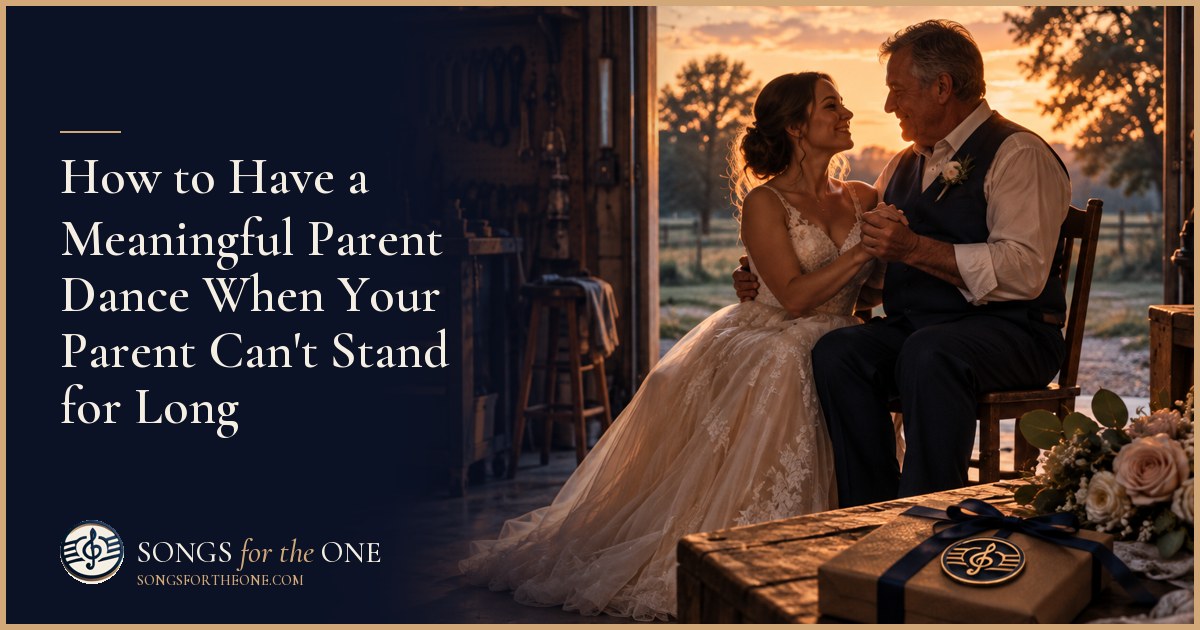
You can both sit in chairs angled toward each other, hold hands if that feels comfortable, and move gently with the music. You can also stay still, share a few words, or simply listen together. The song and your attention create the moment. You do not need coordinated movements, chair choreography, or a performance for the room.
Choose stable seating your parent finds comfortable, rather than decorative chairs chosen only for photographs. If your parent uses a wheelchair, ask where they would like to be positioned and whether they want you seated beside them. Do not assume they want to transfer to another chair. Keep their mobility aid accessible and ask before touching or moving it.
For example, a fully seated version could begin with both of you already in place at the edge of the floor. The DJ starts the music softly, you share one verse and a chorus, and the song fades while you remain seated. Ask the photographer to capture the connection at your eye level rather than requesting a standing pose afterward.
Can we shorten the dance or stand for only part of it?
Yes. Pick a length your parent feels comfortable attempting, rather than assuming you must use the whole song. A planned excerpt of 45 to 90 seconds is one possible format, not a target your parent must reach. Even a few shared bars can mark the occasion. Avoid making the emotional payoff depend on reaching a final chorus several minutes into the track.
If your parent wants a standing portion, decide whether it belongs at the beginning or somewhere else, and whether a transition is worth the effort. For example, you might share a brief standing sway, sit when your parent chooses, and listen to the remaining excerpt together. Another option is staying seated throughout and exchanging a hug only if they want one.
A supported version should use the support your parent already relies on and feels confident using. Do not treat your arm as a substitute for their usual mobility aid or improvise lifts, turns, or dips. If standing or transferring raises safety questions, follow their existing care guidance or seek advice from an appropriate clinician. A fully seated dance remains a complete choice, not a lesser backup.
What musical cues should we give the DJ or band?
Give the music team a short written cue plan: where the excerpt begins, where it normally ends, and who can request an earlier finish. Use timestamps for a recording and agreed musical phrases for a live band. Starting at a recognizable verse or chorus can help the moment feel settled immediately, without a long instrumental introduction while everyone waits.
Make the ending gentle and predictable. For example, you could request a short fade after the first chorus, with no invitation to keep dancing. Agree on a discreet signal, such as a nod from you to the coordinator, that means “fade now.” Your parent should also know they can simply tell you they want to stop. They never have to wait for the cue.
If you plan a standing-to-seated transition, a musical phrase can serve as a reminder, but it should not become a deadline. Sit sooner whenever needed, and let the music continue or fade around that choice. Tell the DJ not to invite a surprise standing ovation, announce an encore, or encourage guests to join unless you have both agreed beforehand.
What can we arrange if the wedding is very soon?
Keep the plan small: one conversation with your parent, one usable song excerpt, and one clear message to the people handling the moment. You do not need new choreography or elaborate staging. An existing song you both love can work beautifully. If there is no time to prepare an edit, ask whether the DJ can start at an agreed point and fade on your signal.
Confirm the physical setup with the venue or coordinator. Reserve suitable chairs, keep the route clear of bags and cables, and avoid a location that requires unnecessary steps or a platform. Allow time to get settled before the introduction begins. Assign one trusted person to coordinate the details so your parent is not answering several vendors' questions during the reception.
Keep the announcement simple and protect your parent's privacy. For example: “Please enjoy this special song shared by Alex and their father.” There is no need to explain a diagnosis or describe the moment as overcoming a limitation. Tell the photographer, DJ, and coordinator that there should be no requests to stand for an extra picture. The agreed format should be respected from start to finish.
Would a personalized song help us make the moment our own?
A personalized song can help when you want the words to carry the meaning, so movement is optional. Songs for the One creates original, AI-assisted songs for one person, sung with AI vocals rather than your own voice. You talk or type with Muse for about 3 to 7 minutes about your parent, a memory, the feeling, the musical style, and what you most want them to hear.
For example, you might describe your parent's quiet encouragement and ask for a gentle sound that suits listening together. You can review story notes of what Muse understood and hear a free preview before buying. The core song is made in minutes, though processing time varies. Read how it works, and keep an existing track ready if the reception is close.
The Song package costs $79 and includes the full song, an MP3 download, a shareable gift page, a lyrics sheet, and five re-records. The full song is usually about 2:40 to 3:40, but your dance can use a shorter agreed excerpt. See package details, then create a song and hear your free preview if it suits your plan. The preview is free; the full song is paid.
Frequently asked questions
- Is it still a parent dance if neither of us stands?
- Yes. Sitting together while music plays can serve the same purpose: sharing a meaningful moment with your parent. You can call it a parent dance or a special song, whichever you both prefer.
- What if my parent wants to stop almost immediately?
- Stop when they ask, without waiting for the chorus or planned ending. Your agreed DJ signal can bring the music to a gentle close, and you can remain seated together if your parent wants.
- Should we practice beforehand?
- A brief check of the seating, route, and cues may be more useful than rehearsing a full dance. Only practice movements your parent wants to try, and do not use rehearsal to test how long they can stand.
- How do we keep guests from crowding around?
- Ask the coordinator to keep the route and space around your chairs clear. The DJ can invite guests to enjoy the moment from their seats without mentioning your parent's health or mobility.
- Can we skip the public dance and still share the song?
- Absolutely. Listen together privately before the reception, at your parent's table, or at another time they choose. A public spotlight is not required for the moment to matter.
Plan your song
Further reading
- Great questions to ask the people you loveStoryCorps
- The science of gratitudeGreater Good Science Center, UC Berkeley