
Sports and walk-up music
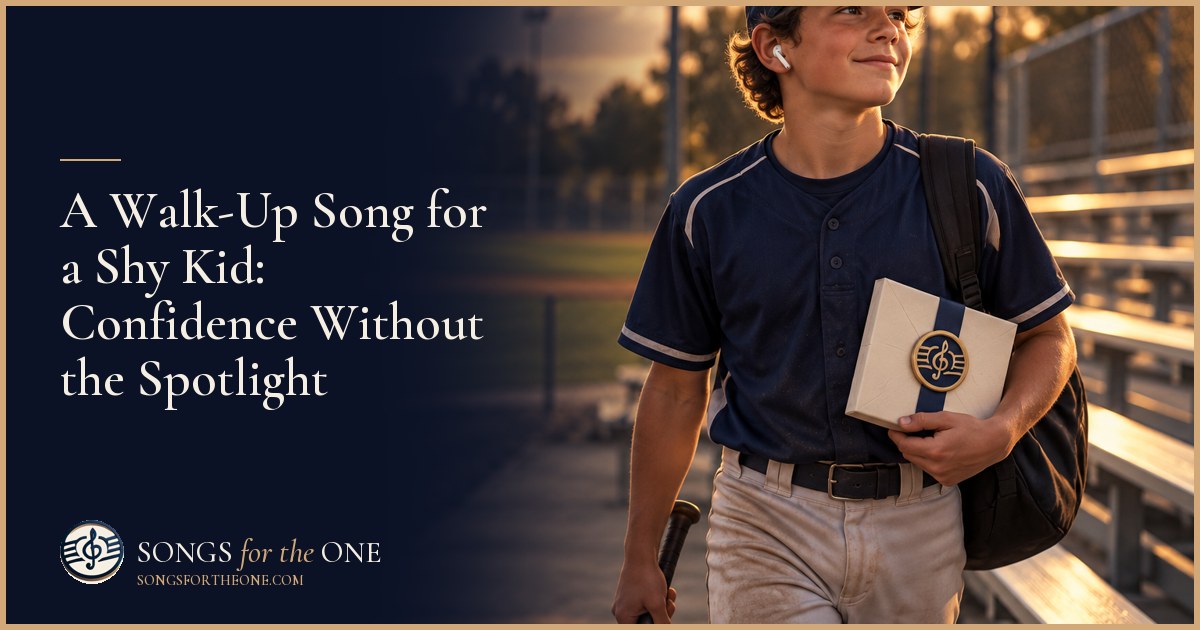
A Walk-Up Song for a Shy Kid: Confidence Without the Spotlight
· 5 min read · By the Songs for the One team
The short answer
The best walk up songs for shy kids match the player's taste, use clean words, and offer encouragement without demanding a big performance. A steady beat and a short, familiar opening can support a comfortable routine. Let the child choose whether a personalized song includes their name or plays around teammates.
Key takeaways
- Ask whether your child wants music before choosing a song.
- Favor a comfortable beat and process-focused encouragement over big predictions.
- Try a short excerpt privately before introducing it at practice.
- An original song can include the player's name, preferred sound, and a meaningful memory.
- Keep use personal or team-based; ticketed or broadcast stadium PA use and sponsored content require a commercial license.
What makes a walk-up song feel encouraging instead of overwhelming?
A good walk-up song gives a nervous player something familiar to return to. It does not need to announce that the team's next superstar has arrived. For a child who dislikes attention, the useful feeling may be closer to “I know what to do next” than “Everyone is watching me.” Choose music that feels like company, not a challenge.
Start with a quiet question outside the rush of game day: “Would music make walking up more fun, or would you rather skip it?” Offer real choices, including no song. A child might enjoy music through headphones before warmups but dislike hearing their name across the field. Those are different experiences, and agreeing to one does not mean agreeing to both.
For example, a player who worries about striking out might prefer a calm groove with a message about taking one pitch at a time. Avoid promises of home runs, claims that nobody can beat them, or lines about proving doubters wrong. Those ideas can turn encouragement into another standard the child feels expected to meet.
Which musical styles work for a quieter player?
Begin with what your child already chooses to hear. Clean pop with a clear beat, relaxed hip-hop with friendly percussion, bright guitar rock, or an upbeat instrumental can all be reasonable directions. The important qualities are a comfortable energy level, an opening they recognize, and no words that embarrass them. Loudness and confidence are not the same thing.
If you are considering an existing recording, listen to the actual version from beginning to end rather than relying on a title or a clean label. Check for sexual references, threats, insults, substance references, and themes your child would not want associated with them. Also listen for sudden sirens, shouted introductions, or dramatic drops that could make a quiet entrance feel like a spectacle.
An original song with the player's name is a standout option when the child likes being recognized but wants something that feels like them. For example, a reserved softball player might choose sunny pop, a first-name mention, and a message about enjoying the next pitch. Another player might want an instrumental opening and save the personal words for private listening.
What should a personalized walk-up song say?
Build the message around actions the player can control: stepping into position, settling their feet, watching the ball, or staying ready after a mistake. Pick one central idea rather than packing the song with coaching instructions. Music can be a reminder of support, but it should not become a checklist delivered in front of teammates.
At Songs for the One, you pick an occasion and talk or type with Muse for about 3 to 7 minutes. Muse gathers five Song DNA elements: The One, The Moment, The Feeling, The Sound, and The Message. For this kind of song, those could be your player, a small practice memory, steady confidence, their favorite musical style, and the words you most want them to hear. You can review the story notes Muse understood.
For example, you could describe a child who kept practicing catches after a frustrating afternoon and wants mellow drums rather than a roaring crowd sound. Ask for encouragement that respects that effort. Leave out private fears, teasing nicknames, school details, or anything the child has not agreed to share. The how it works page explains the process; no songwriting or musical skills are needed.
How do you introduce the song without adding pressure?
Let the first listen happen privately, without filming their reaction or inviting an audience. Say something simple, such as “Tell me what you like and what you'd change.” Avoid asking whether it makes them feel brave. A child may enjoy a song without having an immediate emotional response, and they should not have to perform gratitude for it.
Choose a brief passage with an easy-to-recognize start. About 10 to 15 seconds can be a useful practice excerpt, although you should ask the coach what fits the team's routine. Try it at a comfortable volume while the child picks up a bat or walks toward a practice spot. The aim is familiarity, not getting the entrance exactly right.
For example, you might offer a private listen one day, a backyard rehearsal another day, and an optional practice introduction later. Let your child stop at any stage. If the music becomes one more thing they worry about, put it aside. Keep your support unchanged after a strikeout, a missed catch, or a decision not to use the song.
Where can the team play or share the song?
Songs for the One songs allow personal and team use, including practices, the dugout, the locker room, team parties, and unpaid team videos. That does not automatically cover every setting where a team plays. Stadium PA use at ticketed or broadcast events, as well as sponsored content, requires a commercial license. Email steve@songsfortheone.com to arrange that permission.
Before giving a track to a coach or announcer, explain where you intend to use it and confirm the setting's rules. A ticketed tournament and a private practice are not interchangeable. If a team video includes sponsor promotion, do not assume it qualifies simply because nobody paid you to make the video. Ask about licensing before posting.
Protect your child's comfort as carefully as the usage rights. Anyone with the song's gift link can open it, so share it deliberately rather than treating it as a restricted family space. Ask before sending it to a team group chat. Purchases provide personal-use rights, not a copyright transfer or royalties to the customer.
How can you try a song before committing?
Songs for the One creates original, personalized songs with AI assistance and AI vocals. The singing is not your child's voice or your own, and there is no voice cloning. You hear a free preview before buying; the full song is paid. Use that preview to check the tone with your child rather than assuming that including their name will make it a fit.
The Song package costs $79 and includes the full song, usually about 2:40 to 3:40, an MP3 download, a gift page shared by link, a lyrics sheet, and five re-records. You can compare options on the pricing page. The core song is made in minutes, but processing time varies, so leave room to listen and plan instead of depending on delivery just before a game.
A full-length track gives your player something to enjoy privately as well as a passage to consider for practice. Start with their preferred sound, one meaningful detail, and a message that remains true regardless of the score. When your child is interested, create their song and listen to the free preview together before deciding whether to buy the full version.
Frequently asked questions
- Should I surprise my shy child with a walk-up song?
- Avoid making the first listen a public surprise. Ask whether they want a song, then let them hear it privately and decide whether anyone else should hear it.
- Does a personalized song have to include my child's name?
- You can tell Muse whether you want a name included. A favorite sound, a shared memory, and a supportive message can make the song personal without making the name the centerpiece.
- Can a walk-up song fix pregame anxiety?
- A song can be an optional part of a familiar routine, but it is not a treatment or a guarantee of confidence. If worry regularly makes sports distressing, talk with your child and seek appropriate support rather than relying on music alone.
- Can the stadium announcer play our purchased song?
- Stadium PA use at ticketed or broadcast events requires a commercial license, available by emailing steve@songsfortheone.com. Confirm the event setting and permissions before handing over the track.
- Is the entire personalized song free to try?
- The preview is free before purchase, but the full song is paid. The Song package is $79 and includes the full track, MP3 download, gift page, lyrics sheet, and five re-records.
Plan your song
Further reading
- Great questions to ask the people you loveStoryCorps
- The science of gratitudeGreater Good Science Center, UC Berkeley