
Grandparents
How Can a Useful Gift for My Grandchild Still Feel Like a Present?
· 5 min read · By the Songs for the One team
The short answer
Useful gifts for grandchildren feel like presents when they pair something genuinely wanted with a personal story or a small shared ritual. Confirm the exact item, make the handover intentional, and explain why you chose it. The emotional value can come from your attention rather than extra purchases.
Key takeaways
- Ask for the exact item, size, model, or preferred store before buying.
- Keep the useful gift central instead of adding decorative extras.
- Connect a short note to one real memory or something you admire.
- Offer a shared first use without making it an obligation.
- Add a paid personalized song only if music would genuinely matter to your grandchild.
What makes a practical gift feel like a present?
A practical gift feels personal when your grandchild can see that you chose it for their life, not simply because you thought they ought to have it. The item meets a need; the way you give it says, “I notice what matters to you.” That distinction can turn an everyday purchase into a meaningful gesture without adding anything expensive.
For example, if your grandchild has asked for a sturdy backpack for an apprenticeship, that backpack can be the whole gift. Wrap it, tuck a short note inside, and mention the care you have seen them put into getting ready. There is no need to fill every pocket with small purchases just to make the gift look more generous.
Think in three parts: something wanted, a sentence that explains your choice, and a deliberate moment to give it. That moment might be over breakfast or during a phone call after a parcel arrives. It does not need to be a ceremony, and your grandchild does not need to produce a big reaction.
How do I choose something they will actually use?
Start with a question that leaves room for an honest answer: “Is there something you need that you would enjoy receiving as a gift?” If they name an item, ask about the details. Shoes need the right size and fit. Equipment may need to match something they already own. A practical gift loses much of its usefulness when the recipient has to replace or adapt it.
For example, a grandchild moving into a first apartment might want a particular pan rather than a large cookware set. Ask them to send the exact choice, or offer a budget and let them select it. For a younger child, check with a parent or caregiver about suitability, duplicates, and household preferences while still paying attention to the child's interests.
Be careful with items that could sound like criticism. Exercise equipment, organizing supplies, or study aids are better choices when specifically requested, not offered as a hint to change. If you are unsure, money toward a named purchase or a gift card to their preferred shop may be more thoughtful than a surprise they cannot use.
What can I write so the gift feels personal?
Use a short note to connect the object to your relationship. A helpful shape is: why you chose it, one specific thing you remember, and what you hope it makes possible. Two or three sentences are enough. Avoid turning the note into instructions about how often they should use the gift or how grateful they should feel.
For example, with a requested cooking pot, you might write: “You always wanted to stir the soup when you visited. I loved having you beside me at the stove. I hope this gets plenty of use in your new kitchen.” The memory belongs to both of you, and the gift supports their next chapter without asking them to recreate yours.
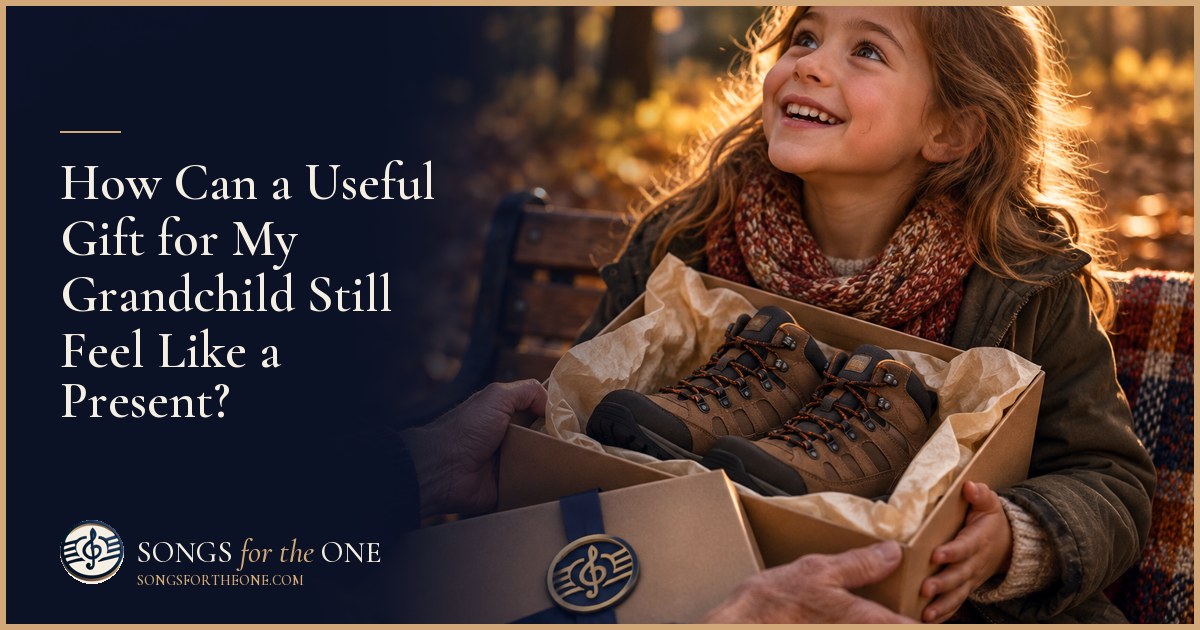
If there is no obvious memory attached to the item, write about the person instead. For example: “You have put a lot of thought into your first camping trip. I wanted to help you get the boots you chose.” Specific recognition is enough. You do not need an elaborate family story, a handmade album, or a polished speech to make your care clear.
What small shared ritual could go with it?
A shared ritual works best when it fits naturally around the gift. Offer to make the first meal in the new pan, take a short walk in the new boots, or hear about the first class where the supplies were used. The point is to share a little of their enjoyment, not to schedule a second event that becomes another task.
For example, if you give a younger grandchild a requested set of pencils, you could ask whether they would like to draw beside you for ten minutes. If you give an adult grandchild a train pass, you might invite them to tell you about a place they visit. Neither invitation needs a purchase, and both should be easy to decline.
Distance does not rule this out. A brief call, a voice message, or a recipe you read aloud together can create a sense of occasion. Ask what suits them rather than requiring an unboxing video or photograph. It is also fine to let the gift stand on its own if your grandchild prefers a quiet thank-you and a private first use.
When would a personalized song add something meaningful?
A song is worth considering when music is something your grandchild enjoys and you have a message you want them to keep. It is an optional addition, not a requirement for making a practical gift thoughtful. A handwritten note or a recording of you telling a memory may serve the purpose just as well, especially if you want to keep spending focused on the requested item.
Songs for the One makes original, AI-assisted personalized songs for one person. You choose an occasion, then talk or type with Muse for about three to seven minutes. Muse gathers who the song is for, a memory, the feeling, the musical style, and the message you most want heard. You see story notes of what Muse understood, and no songwriting or music skills are needed. You can explore how it works before deciding.
For example, a song accompanying a first-apartment gift could focus on kitchen memories and your confidence in your grandchild, rather than describing the cookware. Songs use AI vocals, not your voice. The Song package costs $79 and includes the full song, an MP3 download, a shareable gift page, a lyrics sheet, and five re-records. Check the package options only if the addition fits your budget and their taste.
How do I put it together without overdoing it?
Let the wanted item remain the center of the gift. Use simple wrapping if appropriate, add your note, and choose one personal gesture rather than several. For example, a requested winter coat with a card about the walks you enjoy together already has both practical and emotional value. It does not need a matching collection of accessories unless those were wanted too.
If the gift is money or a contribution, name its purpose without making it conditional. For example: “This is toward the desk you picked for your new place. I hope it makes working there more comfortable.” Let your grandchild manage the purchase. Your attention can make the gift feel considered without taking control of the decision.
Before adding anything, ask yourself whether it will matter to them or simply make the package look fuller. A useful gift and a few sincere words may be all you need. If a song would carry something you want your grandchild to hear, you can start with Muse and hear a free preview before deciding whether to buy the full song.
Frequently asked questions
- Is it all right to give exactly what my grandchild asked for?
- Yes. Getting the exact item can show that you listened, especially when fit, style, or compatibility matters. Keep any surprise in the wrapping or personal note rather than changing their choice.
- How can cash feel like a proper present?
- Put it in a card with a specific, warm message about what it will help them do. If it is not intended for a particular purchase, say that you want them to choose something useful or enjoyable without reporting back.
- Should I include a gift receipt?
- Yes, when one is available. Tell your grandchild that exchanging the item is welcome, so getting the right fit or version does not feel like rejecting your thoughtfulness.
- What if my grandchild does not want to open the gift with me?
- Let them open it in their own time. You can include the personal message in a note and offer a call later without making a live reaction part of the gift.
- Can I include my own voice in a Songs for the One song?
- Songs for the One uses AI vocals, not your voice, and does not offer voice cloning. If hearing your voice matters, you could separately record yourself reading a note or sharing a memory.
Plan your song
Further reading
- Great questions to ask the people you loveStoryCorps
- Friends and family advice for grandparentsAARP
- The science of gratitudeGreater Good Science Center, UC Berkeley