
Grandparents
Can a Personalized Song Become a Goodbye Ritual for My Toddler Grandchild?
· 5 min read · By the Songs for the One team
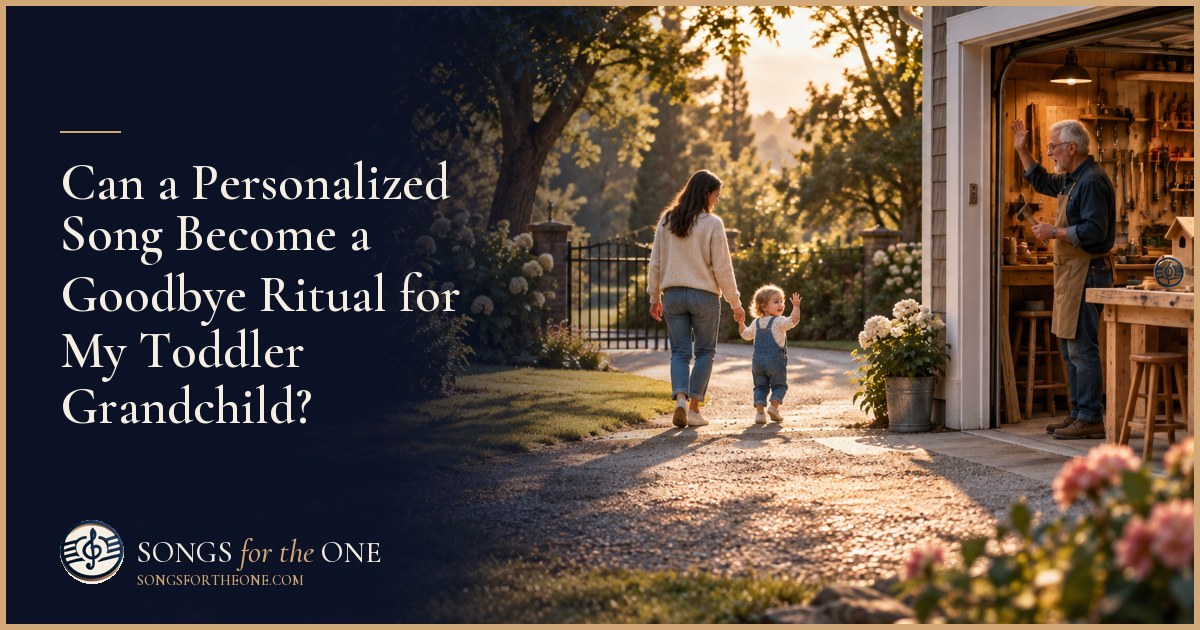
The short answer
A goodbye song for toddler grandchildren can become a familiar farewell ritual when it is short, consistent, and coordinated with their parents. A personalized song can acknowledge missing each other while marking what happens next. Its purpose is connection and predictability, not preventing every tear.
Key takeaways
- Use one short, recognizable part of the song at the door.
- Agree on the goodbye sequence with your grandchild's parent.
- Include affection and a truthful next step, not promises of no sadness.
- Offer a wave or hug without requiring participation.
- Keep the departure moving even when your grandchild feels upset.
Can a goodbye song help even if my grandchild still cries?
Yes. A song can give your goodbye a recognizable shape without making separation easy every time. Your toddler grandchild may enjoy the tune, anticipate the last wave, and still cry when it is time to leave. That does not automatically mean the ritual has failed. The aim is to make the farewell familiar and caring, not to produce a cheerful performance at the door.
Keep the message small enough for the moment: we enjoyed being together, it is time to go, and we care about each other while apart. For example, you might ask for a song that mentions putting away the blocks and waving from the doorway. Those concrete details connect the music to something your grandchild can see and do.
Your own feelings deserve space, too, but your grandchild does not need to manage them. Saying, "I'll miss you, and I'm glad we played," shares affection. Saying, "Grandma will be so lonely unless you stay," makes the departure heavier. Let the song express love without asking your grandchild to make you feel better.
What should we agree on with their parents first?
Before creating the song, ask your grandchild's parent what already works at pickup. There may be an established sequence, such as shoes, coat, cuddle, then the car. A song should fit that sequence rather than introduce another task when everyone is ready to leave. Agree on where the music belongs and who will start it.
Choose a clear ending together. For example, the parent could put on the child's coat, you could sing one short refrain, and everyone could wave before walking out. Avoid making another verse the reward for protesting or restarting the song each time the door opens. A warm ending can still be an ending.
Also agree on what you will say about the next visit. If Saturday is confirmed, you can name it, though it may mean little to a young toddler. If plans are uncertain, use something truthful such as, "We love our time together." Do not build a promise of tomorrow into a song that will also play before longer gaps between visits.
What words and musical details belong in the song?
Start with your grandchild's familiar name for you, one shared activity, and a simple goodbye action. For example, a hypothetical song brief might mention Nana, the wooden train set, and a little wave beside the shoe basket. A few recognizable details are more useful here than a complete account of your relationship or a long list of milestones.
Ask for plain language, repetition, and a gentle, easy-to-follow sound. The refrain should make sense even if your grandchild understands only a few words. You could request a message along the lines of, "We had our playtime, now we wave goodbye, and I love you." Treat that as a direction for the original song, not a requirement to fit complicated wording into every line.
Leave room for feelings without predicting them. "It's okay to miss each other" is different from "You won't be sad." Avoid asking your grandchild to smile, be brave, or stop crying to prove they like the song. If you want a playful sound, choose it because your grandchild enjoys playful music, not because the tune must cancel out sadness.
How can I turn a full personalized song into a short ritual?
The song itself and the doorway ritual do not need to be the same length. Every paid Songs for the One song includes a full track, usually about 2:40 to 3:40. That can be something you enjoy together during a relaxed visit. At departure, use one short, recognizable part rather than keeping a dressed, tired toddler waiting through the entire recording.
Introduce the music when nobody is leaving. For example, listen while putting away toys earlier in the visit, then practice a small wave during the refrain. At the next pickup, tell your grandchild, "After your shoes, we'll do our goodbye song." You can sing the selected part yourself, play it, or simply use its familiar words if the room is noisy.
Offer participation, not a test. Your grandchild can wave, hold their toy, lean against their parent, or just listen. A hug should be optional. If the song seems to add frustration, shorten or skip it that day. Keep the goodbye warm and clear rather than insisting on completing the ritual exactly as planned.
How do I make a song that sounds like our relationship?
Songs for the One makes original, AI-assisted personalized songs. You choose an occasion, then talk or type with Muse, a guide, for about 3 to 7 minutes. No songwriting or music skills are needed. For this purpose, explain that the song is from a grandparent to a toddler grandchild and will support a brief, repeatable goodbye.
Muse gathers five Song DNA elements: The One, The Moment, The Feeling, The Sound, and The Message. For example, your hypothetical brief could identify your grandson, an afternoon building block towers, warm affection with room for missing each other, a soft acoustic sound, and the message that goodbye does not change your love. You see story notes of what Muse understood, so check the names, memories, and meaning carefully.
You can explore how the process works and hear a free preview before buying. Listen for clear words, a recognizable refrain, and a tone you would comfortably repeat. The recording uses AI vocals, not your voice, and there is no voice cloning. You can still sing along yourself. The core song is made in minutes, but processing time varies.
What is the simplest way to start without making goodbye bigger?
Start with the routine, not the purchase. Try the same brief farewell words and wave over a few visits. A spoken rhyme, a simple tune you make up, or a familiar goodbye phrase may be enough. Personalization is useful if you want a fuller musical keepsake of your relationship, but a paid song is not required for a loving ritual.
If you choose a personalized recording, The Song package costs $79. Every paid song includes the full song, an MP3 download, a gift page shared by link, a lyrics sheet, and five re-records. You can review package pricing without adding artwork or video for this purpose. Anyone with the gift link can open it, so share it thoughtfully with your grandchild's parent.
After trying the ritual, compare notes with the parent: was the song welcome, was it too long, and did the ending stay clear? Look for whether it fits your family, not whether every goodbye is tear-free. When you are ready, create your goodbye song and hear the free preview before deciding whether to buy the full song.
Frequently asked questions
- Should I play the song at every goodbye?
- Use it consistently when it fits, but do not make it mandatory. If your grandchild is exhausted or the pickup is rushed, a short phrase and wave can preserve the familiar ending.
- What if my grandchild asks to hear it again instead of leaving?
- Acknowledge the request and keep the agreed ending: "You want more song. We finished our goodbye, and now you're going with Dad." Their parent can decide whether to listen again later, away from the doorway.
- Can the song include both grandparents?
- Yes, describe both grandparents and the familiar names your grandchild uses for them in your brief. Keep the farewell words simple enough that either grandparent can use the same short refrain.
- Can I use my own singing voice in the recording?
- Songs for the One uses AI vocals, not your voice, and does not offer voice cloning. You can sing the refrain yourself during goodbye or sing along with the recording.
- What if hearing the song makes my grandchild more upset?
- Pause it and use a calm, brief goodbye coordinated with their parent. You can try listening during relaxed play another time, or choose a different ritual if the music is not helping.
Plan your song
Further reading
- Great questions to ask the people you loveStoryCorps
- Friends and family advice for grandparentsAARP
- The science of gratitudeGreater Good Science Center, UC Berkeley