
Guides
Should You Play the Song Before or After They Open the Jewelry Box?
· 5 min read · By the Songs for the One team
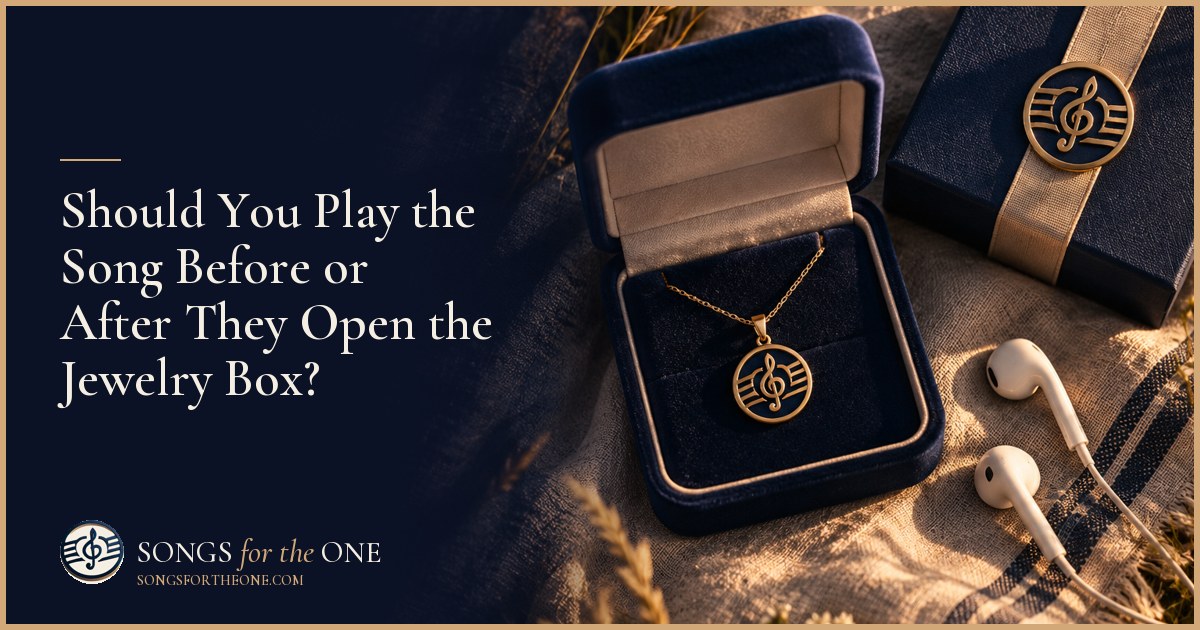
The short answer
When deciding on a song before or after jewelry, choose jewelry first unless the song explains the piece’s meaning. Let them open the box, react, and then listen together. Play the song first when its story prepares them for a meaningful symbol, inscription, or connection they might otherwise miss.
Key takeaways
- Default to opening the jewelry first, then playing the song after their initial reaction.
- Play the song first only when its story helps explain the jewelry.
- Avoid asking them to unwrap, listen closely, and respond at the same time.
- Test playback and keep the song ready before bringing out the box.
- Move the song to a quieter moment if the setting makes listening difficult.
Should the jewelry or the song come first?
For most jewelry gifts, let them open the box first. A small box naturally pulls attention toward what is inside. Once they see the piece, they may want to turn it over, inspect an inscription, ask a question, or put it on. Give those reactions room before introducing something that asks them to listen.
Then use the song to add the meaning behind the object. A simple transition is enough: “There’s something else that goes with it. I wanted you to hear why I chose this.” You do not need a speech, and you do not need to press play the instant the lid opens. Wait until the first conversation settles.
Think of the two gifts as doing different jobs. The jewelry is something they can wear and keep close. The song can explain a memory, a feeling, or a message that would be difficult to fit on a card. Opening the box first usually lets each gift have its own moment instead of making the recipient choose where to focus.
When does playing the song first make more sense?
Play the song first when understanding the story will change how they see the jewelry. This works especially well with a symbol that is personal rather than immediately obvious. For example, a hypothetical pendant shaped like a leaf could refer to a particular walk you shared, rather than simply their taste in nature-inspired jewelry.
In that situation, let the song establish the memory before presenting the box. You might say, “I want you to hear this first, because it explains what I picked.” Keep the box out of their hands while they listen. Holding a wrapped gift can make someone feel they are supposed to start opening it, even if you intended otherwise.
Check whether the song names the jewelry directly. If you want to preserve the visual surprise, the lyrics can focus on the memory and message rather than naming the necklace, bracelet, or ring. If the piece supports a bigger conversation, such as a proposal, make the actual question yourself. The song can set the scene without having to speak for you.
How do you keep the two gifts from competing?
The simplest rule is one main action at a time. Unwrapping creates movement and noise. Looking at jewelry draws the eyes downward. Listening to unfamiliar lyrics takes attention. Starting all three together may look coordinated in your imagination, but it can make the details harder to take in.
Avoid planning the box opening around an exact lyric or musical swell unless the timing genuinely matters to you both. A ribbon that catches or a clasp that needs help can throw off that plan. A more forgiving sequence is to open the box, talk, settle back together, and then start the song from the beginning.
Give them choices without turning the reveal into instructions. Ask, “Would you like to put it on before we listen?” rather than directing every movement. If they speak during the song, it is fine to pause. If they are quiet, let them be quiet. Tears, immediate praise, and a particular facial expression are not requirements for a meaningful response.
What can you prepare if you are giving the gift today?
Choose the order now, then handle the practical details. Put the jewelry in its box, remove any packaging that would interrupt the reveal, and choose somewhere you can sit comfortably for a few minutes. Test the speaker or phone volume with other audio first. Silence notifications and have the intended song ready, rather than searching for it while they wait.
If you are still making the song, Songs for the One offers an AI-assisted process built around talking or typing with Muse for about 3 to 7 minutes. Muse gathers who the song is for, a memory, the feeling, the musical style, and the message you most want them to hear. No songwriting or music skills are needed. You can review story notes of what Muse understood.
For this pairing, concentrate on one connection between the person and the jewelry. For example, a hypothetical anniversary song might revisit a shared beginning and explain what still matters now, rather than listing every milestone. You can read how the process works before starting. The core song is made in minutes, but processing time varies, so leave room to listen and do not build the reveal around guaranteed instant delivery.
You hear a free preview before deciding whether to buy the full song. The Song package is $79 and includes the full song, an MP3 download, a shareable gift page, a lyrics sheet, and five re-records. Check packages and pricing if you want extras, but a same-day reveal does not need video or streaming. Those additions take 3 to 5 business days after materials are received, and streaming acceptance varies.
What if you are at dinner or other people are watching?
Let the setting influence the sequence. At a restaurant, the jewelry may be easy to share across the table, while a personal song could be difficult to hear without disturbing nearby diners. Give the box there if that feels right, then save the listening for home or another quiet place. The gifts do not have to happen within the same five minutes.
With family or friends present, consider whether the recipient enjoys attention and whether the song contains private details. For example, a hypothetical song about getting through a difficult year may feel more comfortable in a private room than at a crowded birthday table. You can simply say, “There’s a song to go with this that we can listen to later.”
If you are apart, arrange a call and let them open the delivered jewelry first, then send the gift link when they are ready to listen. Anyone with a Songs for the One gift link can open it, so share it thoughtfully. If playing a song feels too exposed for the occasion, a handwritten note is an honest alternative for the reveal, with the song saved for later.
What should you say when it is time to press play?
Keep your introduction short enough that the song still has something to say. For jewelry first, try: “I chose this because it reminded me of us. The song explains that better.” For song first, try: “Listen to this with me, and then I have something for you.” These are optional prompts, not lines you need to memorize.
Afterward, leave a little space before asking questions. You might offer to help with the clasp, show them the inscription, or explain how they can listen again. Avoid immediately asking for a review of the song or whether the jewelry was the right choice. There will be time for practical questions once the first moment has passed.
You only need a clear order, working playback, and a message you mean. If the jewelry already makes sense on its own, open it first. If the story gives the piece its meaning, listen first. When you are ready, start your song and hear the free preview before deciding whether to buy the full song.
Frequently asked questions
- Should I play the song while they unwrap the jewelry?
- Usually, it is better to separate those actions. Wrapping noise and the excitement of seeing the jewelry can distract from the lyrics, so wait until they have finished opening it or play the song before handing over the box.
- How long should I wait after they open the jewelry box?
- Follow their attention rather than a timer. Let them look at the piece, ask questions, and decide whether to put it on before offering to play the song.
- Should the song mention the exact piece of jewelry?
- It can, but it does not have to. If the song comes first and you want the object to remain a surprise, focus on the memory or symbolism instead of naming the piece.
- Do I need to sing the personalized song myself?
- No. Songs for the One uses AI vocals, not your voice, and does not offer voice cloning. You provide the story and preferences rather than a vocal performance.
- What if the song is not ready when I give the jewelry?
- Give the jewelry with a short note about why you chose it, then share the song when it is ready. A separate listening moment can still connect the two gifts without making the jewelry reveal feel unfinished.
Plan your song
Further reading
- Great questions to ask the people you loveStoryCorps
- The science of gratitudeGreater Good Science Center, UC Berkeley