
Occasions
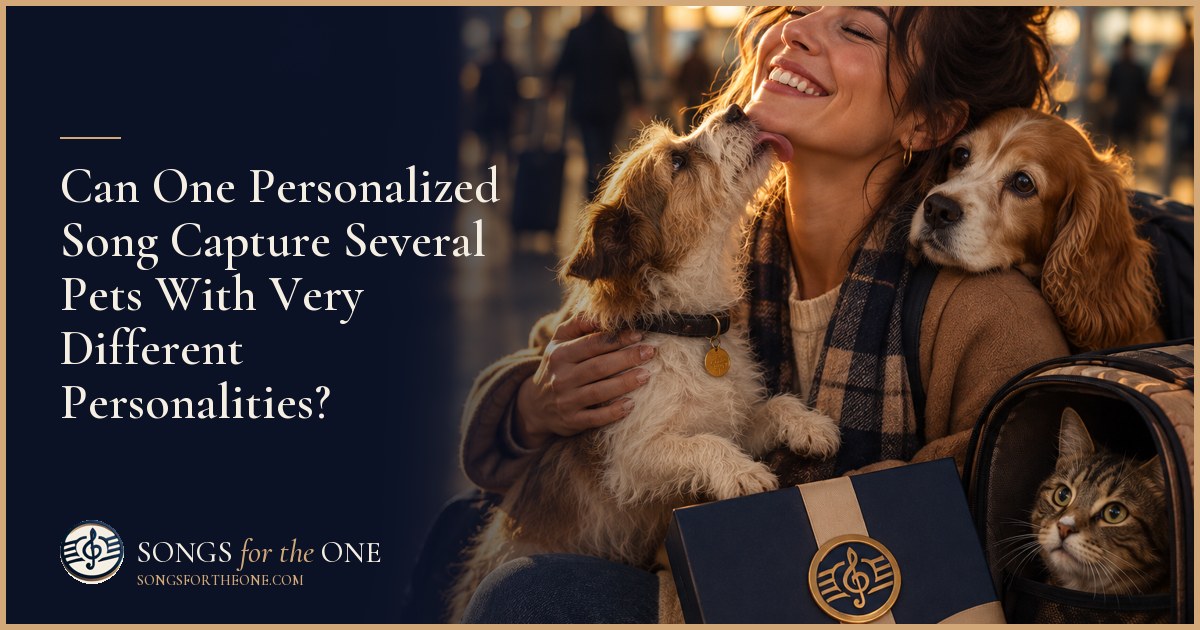
Can One Personalized Song Capture Several Pets With Very Different Personalities?
· 5 min read · By the Songs for the One team
The short answer
A personalized song for multiple pets can capture contrasting personalities by connecting them through one shared household story. Give each pet a distinctive habit, show how they interact, and build the message around the person who loves them. A familiar routine creates unity without making every animal sound alike.
Key takeaways
- Choose one shared routine, such as coming home or settling down at night.
- Give each pet one recognizable action rather than a long biography.
- Use interactions to connect personalities instead of listing names.
- Build the central message around what the household means to the recipient.
- Check names and character details in the free preview before buying.
How can very different pets belong in the same song?
Yes, and their differences can be what makes the song feel personal. The key is to choose a story that holds them together: the welcome at the door, the daily negotiation over sofa space, or the quiet hour before bed. The song is a gift for the person who loves this household, so that person's experience provides the thread connecting every animal.
For example, imagine a household with a dog who greets everyone noisily, a cat who observes from a safe height, and a smaller dog who waits for a lap. A homecoming scene gives all three a natural place. You do not have to explain their entire histories. Their different responses to the same event reveal who they are.
Start with a sentence you want the recipient to recognize as true: 'Coming home to your little crew is your favorite part of the day.' That is the song's central idea. Every pet detail should help tell that story, rather than compete to become a separate story with its own beginning and ending.
What details should I gather when I am short on time?
You do not need a detailed biography for every pet. Make a quick note of each name, how it is pronounced, one signature habit, and one relationship within the household. Add a shared routine and the message you want the recipient to hear. Those details give you a useful starting point without requiring an afternoon of research.
Choose actions you could picture in a photograph. For example, 'Milo carries a sock to the door' gives more direction than 'Milo is funny.' 'Juniper watches dinner preparations from the same kitchen stool' is more distinctive than 'Juniper is independent.' Small, ordinary details often provide the recognition that broad compliments cannot.
If you are buying for someone else's household, use what you genuinely know. A brief question such as 'What does each of them do when you get home?' can fill several gaps at once. If keeping the surprise matters more, work with familiar details you have witnessed. Avoid guessing about an animal's history, health, or special significance.
How do I keep the song from becoming a list of names?
Think in scenes and reactions rather than introductions. A list gives each pet a name followed by a description, then moves on. A scene lets one animal's behavior lead into another's. For example, a puppy taking the warm seat can prompt a cat's offended stare while an older dog stays peacefully asleep beside the recipient.
A useful structure is a shared scene, a moment of interaction, and a return to the household's larger meaning. The repeated central message can focus on belonging, companionship, or the lively home the recipient has created. It does not need to repeat every name each time. Names help recognition, but the emotional thread makes the song feel complete.
Give each pet a recognizable moment rather than demanding identical amounts of attention. A quiet animal can be captured beautifully in one precise image. If one pet's antics supply most of the action, deliberately include a quieter interaction elsewhere. That creates balance without forcing every verse into the same pattern or making the result sound like a roll call.
What tone works for a household full of contrasting personalities?
Choose the tone for the recipient first, then let the pets add texture. Someone who affectionately narrates daily animal mischief may enjoy a playful approach. Someone who treasures the companionship of a quiet home may prefer warmth with a few light touches. Several personalities do not require several musical styles; one consistent sound can hold their differences together.
For example, a bright, relaxed acoustic style could support both a dog's enthusiastic greeting and a cat's cautious inspection of a visitor. The contrast comes from the story details, not necessarily from changing genres whenever a different animal appears. Describe the overall listening experience you want, then explain where humor or tenderness should sit within it.
Be careful with household jokes that may sound harsher in a song. 'The tiny supervisor of every meal' can convey affection more clearly than calling a pet difficult or troublesome. If the household includes a pet who has died, decide whether this is mainly a celebration of daily life or a remembrance. Do not introduce grief as a surprise.
How do I turn these notes into a personalized song?
Songs for the One makes original, AI-assisted personalized songs for one person, so frame this as a song for the pets' person about their shared life. After choosing an occasion, you talk or type with Muse for about 3 to 7 minutes. No songwriting or music skills are needed. You can review the process on the how it works page.
Muse gathers five Song DNA elements: The One, The Moment, The Feeling, The Sound, and The Message. For this gift, those could be the recipient, a familiar homecoming, affectionate amusement, a relaxed musical style, and appreciation for the home they give their animals. You see story notes of what Muse understood, which helps you check whether the pets' distinguishing details came through.
The core song is made in minutes, although processing time varies, so do not plan around guaranteed instant delivery. The free preview lets you hear the direction before buying. The Song package costs $79 and includes the full song, an MP3 download, a gift page shared by link, a lyrics sheet, and five re-records. Check package options and pricing if you want more than the core song.
What should I check before giving the song?
Listen to the preview for recognition, not just name inclusion. Are the names you hear pronounced correctly? Are habits assigned to the right animals? Does the tone suit the recipient? Check the story notes too, especially when pets have similar names. The preview is a chance to assess what you hear, not a substitute for purchasing the full song.
For a near-term occasion, keep the presentation simple. The paid song's gift page can be shared by link, perhaps with a short personal note explaining which familiar routine inspired it. Anyone with that link can open the page, so share it thoughtfully. Video and streaming options take 3 to 5 business days after materials are received; they are not a shortcut for an immediate celebration.
Your final test is straightforward: does this sound like one person's home, with several unmistakable characters living in it? If you have a shared scene, one telling habit per pet, and something meaningful to say to their person, you have enough to begin. Create their song and hear a free preview before deciding whether to buy the full song.
Frequently asked questions
- Can a song include both cats and dogs?
- Yes. Connect them through a shared routine or their relationship with the recipient, while giving each animal a distinct action or habit.
- Does every pet need its own verse?
- No. Several pets can appear naturally within the same scene. Aim for a recognizable detail for each rather than a separate verse or equal line count.
- What if I do not know many details about the pets?
- Use a few accurate details rather than inventing more. Asking what each pet does at mealtime or when their person arrives home can give you a useful shared scene.
- Will the song be sung in my voice?
- No. Songs for the One uses AI vocals, not the customer's voice, and does not offer voice cloning.
- Can I include a pet who has passed away?
- Yes, you can include that pet in the story you share. Be clear about whether you want a gentle acknowledgment or a remembrance-focused song, and consider whether the recipient would welcome that emotional direction.
- Is the full song free to download?
- No. The preview is free, but the full song is paid. Every paid song includes an MP3 download, a shareable gift page, a lyrics sheet, and five re-records.
Plan your song
Further reading
- Great questions to ask the people you loveStoryCorps
- The science of gratitudeGreater Good Science Center, UC Berkeley