
Sports and walk-up music
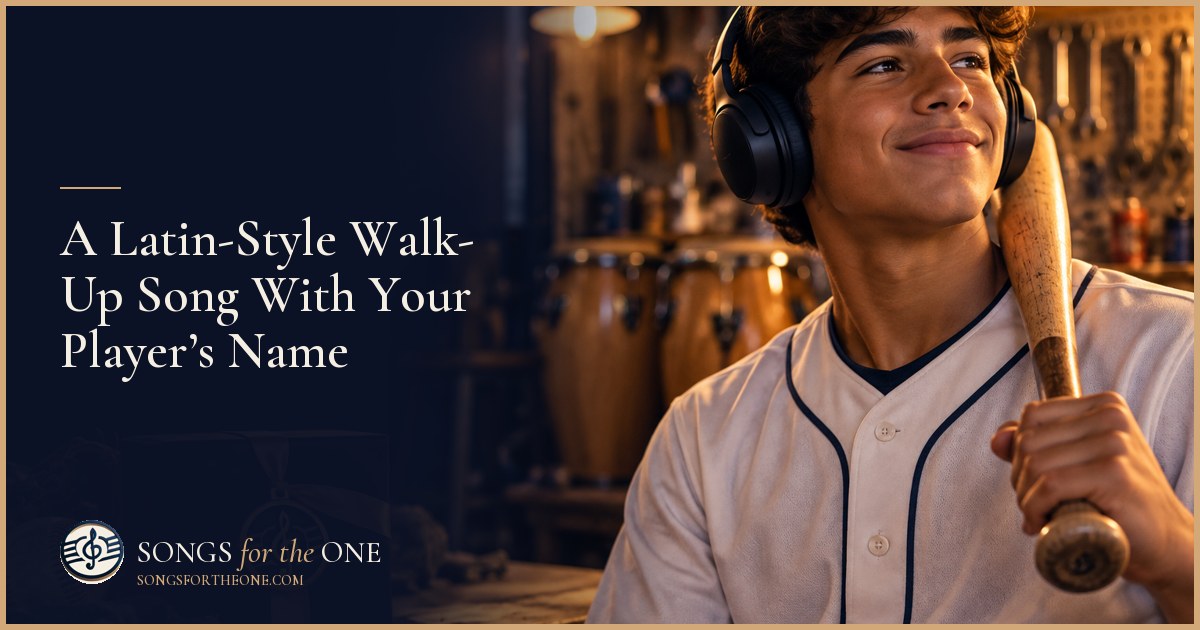
A Latin-Style Walk-Up Song With Your Player’s Name
· 5 min read · By the Songs for the One team
The short answer
A latin walk-up song can pair your player’s name with a reggaeton pulse, salsa-inspired percussion, or a bilingual hook. Choose a clean, short entrance phrase and a sound the player enjoys. Personal and team uses are allowed, while ticketed or broadcast stadium playback and sponsored content require a commercial license.
Key takeaways
- Choose a specific sound, such as reggaeton-inspired rhythm or salsa-inspired brass and percussion.
- Put the player’s name early in the entrance moment and provide pronunciation guidance.
- Keep bilingual lyrics natural, clean, and comfortable for the player.
- Check event permissions before using the song beyond personal or team settings.
- Hear a free preview before purchasing the full personalized song.
What makes a Latin-style walk-up song feel like your player?
The strongest walk-up idea starts with the player, not a generic sports slogan. Their name, an approved nickname, and one recognizable quality give the music a reason to belong to them. A confident hitter might want a steady, unhurried entrance. A player who brings energy to every practice might prefer a bright, lively rhythm. Ask what feels comfortable before planning a surprise that will be heard by teammates.
An original song makes the player’s name part of the music rather than something announced over an unrelated track. For example, a hypothetical player named Mateo might want his name followed by a brief Spanish encouragement and an English line about staying ready. That gives the entrance a personal center without turning it into a long biography.
A familiar instrumental or a clean track the player already enjoys is also a reasonable option, subject to the permissions required for its use. When comparing ideas, focus on genre and qualities: crisp percussion, a strong opening, upbeat brass, or a relaxed groove. Choose an original named song when recognition and personal meaning matter most.
Should you choose reggaeton, salsa, or a blended sound?
“Latin” describes a broad range of music, so it helps to narrow the request. A reggaeton-inspired approach can emphasize a repeating rhythmic pulse, firm bass, and a compact vocal hook. Ask for clean, age-appropriate lyrics and describe whether the mood should be playful, focused, or bold. The genre choice alone does not tell the song maker how your player wants to feel.
A salsa-inspired direction can bring lively percussion, piano patterns, and bright brass accents. It suits a player who likes movement and a celebratory entrance. For example, you could request an energetic opening with the name arriving quickly, rather than an extended instrumental introduction. Clear rhythmic space around the vocal helps the name remain the center of attention.
A blended Latin-pop sound may work better if the player likes a tuneful chorus with some rhythmic drive. Describe the ingredients instead of asking for an imitation of a particular performer: warm vocals, punchy percussion, a memorable melody, and a short opening hook. Let the player choose between two mood descriptions so the decision stays simple and genuinely theirs.
How do you make bilingual lyrics sound natural?
Start with the words your player actually uses and understands. Bilingual lyrics do not need an equal split between English and Spanish, and every line does not need a translation. A mostly English song with a short Spanish encouragement can feel natural, as can a Spanish-led song with an English refrain. Choose the balance that fits the player rather than adding language only for atmosphere.
Provide the player’s exact name, preferred nickname, and a plain-language pronunciation guide. Include any accent marks in the written name, but do not rely on spelling alone to communicate the sound. For example, if a family uses a particular pronunciation of a nickname, explain which syllable carries the emphasis. During the preview, listen specifically for the name and the transitions between languages.
Keep youth lyrics encouraging rather than intimidating. Focus on preparation, joy, teamwork, or staying composed, not threats or insults aimed at opponents. Avoid private family references the player would dislike hearing in the dugout. If you are unsure about a Spanish phrase, have someone fluent review the wording for meaning and tone instead of assuming a literal translation will sound conversational.
How can you make the entrance moment work on the field?
Think of the walk-up as a short moment within a longer song. The player’s name and the main musical idea should arrive together, or close enough that neither gets lost. If your team has a designated playback window, find out its length before choosing the section. A full song can still be enjoyed at home or at a team party even when the entrance uses only a brief passage.
Test the relevant section through the speaker the team expects to use, at a sensible volume and with permission. Listen from a short distance rather than only beside the device. Can you understand the name? Does the vocal compete with the percussion? A version that sounds exciting in headphones may need a clearer vocal moment to work around ordinary field noise.
Agree on who will handle playback and what cue they will follow. For example, at an approved practice, a coach could test the clip as the player approaches the batting area. Avoid making the player wait through setup or a long introduction. Keep the MP3 available on the playback device and check the team’s equipment arrangements before the occasion.
Where are you allowed to use the finished song?
For this walk-up use, Songs for the One allows personal and team settings such as practices, the dugout, the locker room, team parties, and unpaid team videos. That permission is not a blanket commercial license. Purchasing a song does not transfer copyright or give the customer royalties, and downloading the MP3 does not expand the permitted uses.
Stadium PA playback at ticketed or broadcast events requires a commercial license, as does sponsored content. Email steve@songsfortheone.com to arrange that license before using the song in those settings. A youth event can still be ticketed or broadcast, so check the actual event circumstances rather than assuming the player’s age determines what is allowed.
Ask the organizer about venue rules as well as music permissions. For a team video, confirm whether it is unpaid or includes sponsorship before posting. Also consider the child’s privacy: anyone with the song’s gift link can open it. Keep sensitive details out of the lyrics and share the link only as widely as the family and player are comfortable with.
How do you create a named song and check it before buying?
Songs for the One makes original, AI-assisted personalized songs. After picking an occasion, you talk or type with Muse for about 3 to 7 minutes. Muse gathers five Song DNA elements: The One, The Moment, The Feeling, The Sound, and The Message. For a walk-up song, these might be your player, a memorable practice, calm confidence, salsa-inspired energy, and a reminder to trust their preparation. No songwriting or music skills are needed.
You can review story notes showing what Muse understood. Specify the early name placement, preferred language balance, clean lyrics, and pronunciation. The songs use AI vocals, not the customer’s voice, and there is no voice cloning. The core song is made in minutes, though processing time varies. The how-it-works overview explains the process before you begin.
The Song package costs $79 and includes the full song, usually about 2:40 to 3:40, an MP3 download, a shareable gift page, a lyrics sheet, and five re-records. Check package pricing if you also want artwork or other options. You hear a free preview before buying; the full song is paid. When you have the player’s name, sound, and message ready, create their walk-up song and use the free preview to check whether it feels like them.
Frequently asked questions
- Can the song include both English and Spanish?
- You can request bilingual lyrics and describe how much of each language you want. Provide preferred phrases and pronunciation guidance, then listen carefully to the free preview for wording, tone, and the player’s name.
- Will the song use my player’s voice?
- No. Songs for the One uses AI vocals, not the player’s or customer’s voice, and does not offer voice cloning.
- Can we play it over the stadium PA at a ticketed game?
- That use requires a commercial license, including when the player is a child. Email steve@songsfortheone.com before stadium PA use at a ticketed or broadcast event.
- Can we put the song in a team highlight video?
- Unpaid team videos are allowed. Sponsored content requires a commercial license, so clarify the video’s use before posting.
- Is the full walk-up song free?
- No. The preview is free, and the full song is paid. The $79 Song package includes the full song, MP3 download, gift page, lyrics sheet, and five re-records.
- Should we use the whole song for the walk-up?
- Usually the entrance needs only a short passage with a clear name and strong musical opening. Confirm the team’s playback window and choose the relevant section within your permitted use.
Plan your song
Further reading
- Great questions to ask the people you loveStoryCorps
- The science of gratitudeGreater Good Science Center, UC Berkeley