
Grandparents
Should I Give My Grandchild a Family Heirloom Now or Wait Until They're Older?
· 5 min read · By the Songs for the One team
The short answer
The right time for giving grandchildren family heirlooms depends on readiness, not a particular birthday. Give the object now when your grandchild wants it and can care for it with suitable support. Otherwise, share its story now and keep the original safe until circumstances change.
Key takeaways
- Look for genuine interest rather than relying on age alone.
- Weigh emotional value, replacement cost, fragility, and storage needs separately.
- Choose between a full gift, a supervised loan, or sharing the story first.
- Make ownership and care expectations clear before handing anything over.
- Preserve the family story now, even if the object stays with you.
Is there a right age to give a grandchild a family heirloom?
There is no single birthday that makes a grandchild ready for every heirloom. A sturdy recipe box and a delicate antique necklace ask very different things of their new owners. The more useful question is whether this grandchild can enjoy this object in their current circumstances. Giving it now can let you share its meaning together. Waiting can protect something irreplaceable without withholding the family connection.
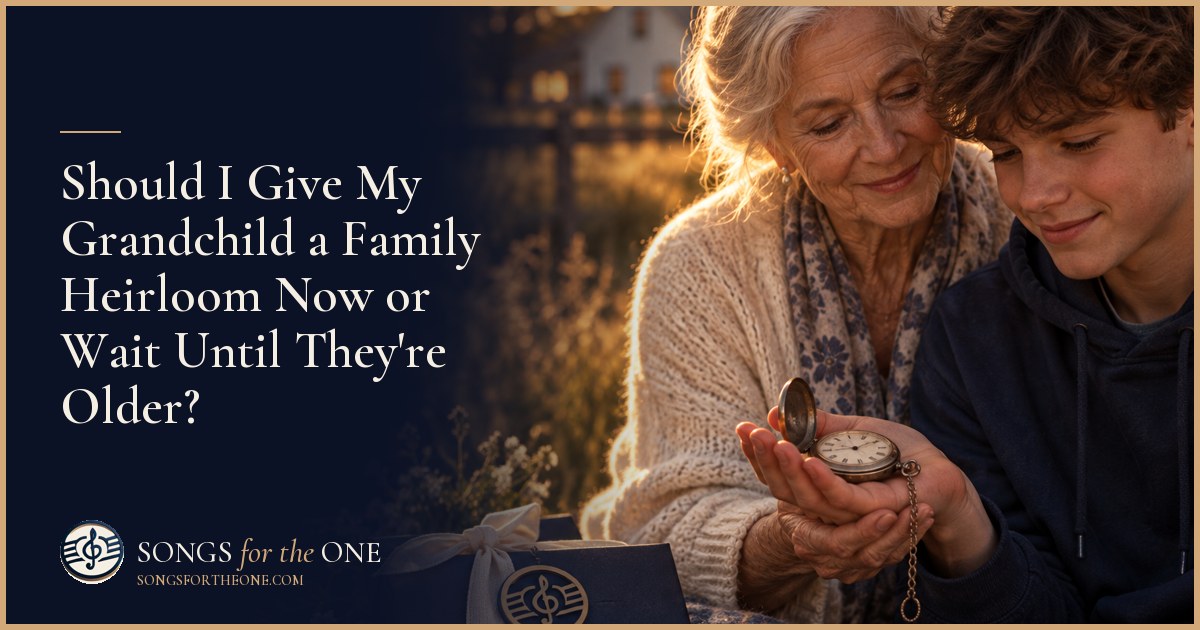
Start by separating three decisions: when to tell the story, when to allow use, and when to transfer ownership. These do not have to happen at once. For example, you might tell a young grandchild about a family pocket watch, let them examine it beside you, and keep it safely stored until they have a suitable place for it.
Your readiness matters too. If you still use the object, would feel distressed seeing it altered, or expect frequent updates about its care, you may not be ready to make an unrestricted gift. That is a reason to pause, not a failure of generosity. Sharing an heirloom should create a connection rather than a continuing test.
How can I tell whether my grandchild actually wants it?
Look for curiosity without demanding a particular reaction. Your grandchild might ask who owned the object, remember its story later, or suggest a place to keep it. Quiet interest counts. Enthusiasm about family history also does not automatically mean they want responsibility for a large piece of furniture or valuable jewelry.
Ask an open question before announcing the gift: "Would you enjoy having this someday, or would you rather keep a photograph and its story?" Give them room to answer later. For example, a grandchild who loves your quilting stories may appreciate a small sewn keepsake more than an antique quilt that requires careful storage.
For a younger child, speak with their parent or caregiver about practical support. Ask whether there is a secure storage spot and who would help with handling. Avoid turning an ordinary mistake into evidence that a child does not value the family. Readiness includes the support available around them, not just their ability to remember instructions.
How should fragility and value affect my decision?
Consider four things separately: interest, fragility, value, and living situation. Is the object wanted? Can ordinary handling damage it? Would loss create a serious financial or emotional burden? Is there a suitable place to keep it? An item with little resale value may still be impossible to replace because of what it means to you.
Use three practical paths. Give it now when interest is clear and care needs are manageable. Offer supervised use when interest is strong but the object is delicate or valuable. Share the story and wait when interest is uncertain, safe storage is unavailable, or a loss would be especially painful. This is a judgment aid, not a score your grandchild has to pass.
Check any unknowns before the handover. For potentially valuable jewelry, artwork, or collectibles, consider a qualified appraisal and ask your insurer about coverage. For fragile textiles, papers, or antiques, seek object-specific preservation advice rather than guessing at cleaning methods. If an object may have hazardous materials or unsafe moving parts, do not treat it as a child's plaything.
Can I share the heirloom now without giving it away?
Yes. A planned afternoon with the object can be meaningful in its own right. Bring it out, explain who used it, and invite questions. If handling is safe, demonstrate how it works or how it was worn. For example, you could show a grandchild a family brooch during a visit, then return it to its case together.
You can also offer a clearly defined loan for a suitable occasion. Say where it will be kept, who will transport it, and when it will return. With a minor, agree on those arrangements with their parent or caregiver. Calling it a loan from the beginning prevents a later request for its return from feeling like a gift has been taken back.
If you decide to give it outright, make the terms equally clear. Explain any care needs, but recognize that ownership may eventually include choices you would not make. If keeping the object unchanged or within a particular household is essential to you, discuss that before giving it. For significant assets or formal restrictions, get qualified legal advice.
What family details should I preserve while I wait?
Record the details that may otherwise disappear: the owner's full name, their relationship to your grandchild, where the object came from, and one specific memory. Separate what you know from what you were told. "Your great-grandmother said she received this before her wedding" is more useful than presenting an uncertain date as established fact.
Take clear photographs of the whole object and any identifying marks, then keep copies of the story with the object and in a separate place. A handwritten note, a photo album, or an audio recording in your own voice can all work. Include why you thought of this particular grandchild without suggesting that accepting it is a family obligation.
If several grandchildren might want it, discuss that thoughtfully rather than assuming silence means disinterest. You could ask privately about their preferences and explain your intended choice without comparing their affection for you. Keep any written wishes consistent with your formal estate plans, and ask an estate-planning professional about valuable or potentially disputed items.
How can I give the story now while keeping the heirloom safe?
Choose a form your grandchild will enjoy. A framed photograph can suit someone with limited space; a recipe copied into a small notebook can connect a younger child to a family cook. A recorded conversation preserves your actual voice. These are complete gifts of connection, not lesser substitutes for receiving the original object.
If music feels right, Songs for the One can turn the story into an original, personalized song from you to your grandchild. You talk or type with Muse for about 3 to 7 minutes about the recipient, a memory, the feeling, musical style, and your message, then review the story notes. The song uses AI vocals, not your voice. You can explore how it works and pricing; the full song is paid, with The Song package at $79.
Keep the message warm and free of obligation. For example, a song about a family watch could focus on afternoons spent together rather than a promise never to lose it. You can decide on ownership later while sharing the meaning today. If that approach suits your family, start a song for your grandchild and hear a free preview before deciding whether to buy the full song.
Frequently asked questions
- What if my grandchild says they do not want the heirloom?
- Accept the answer without treating it as a rejection of you or the family. Ask whether they would like its photograph or story instead, and consider another willing recipient.
- Should I give every grandchild an heirloom of equal value?
- You do not have to make every gift identical, but substantial differences in financial value deserve thoughtful planning. Explain your choices without ranking relationships, and seek estate-planning advice if the gifts affect your broader plans.
- What if my grandchild loses an heirloom I gave them?
- Respond to the loss without equating it with a lack of love. Before giving an irreplaceable object, consider whether you can accept the possibility of damage or loss even with reasonable care.
- Can a parent keep an heirloom safe for a young grandchild?
- Yes, if the parent agrees and has appropriate storage. Clarify whether it is already the child's gift being held for safekeeping or an object you still own and intend to give later.
- How often should I revisit the decision if I wait?
- Revisit it when interest or circumstances change, such as a move to a more settled home or a new interest in family history. There is no need to set a birthday deadline or repeatedly ask your grandchild to prove readiness.
Plan your song
Further reading
- Great questions to ask the people you loveStoryCorps
- Friends and family advice for grandparentsAARP
- The science of gratitudeGreater Good Science Center, UC Berkeley