
Grandparents
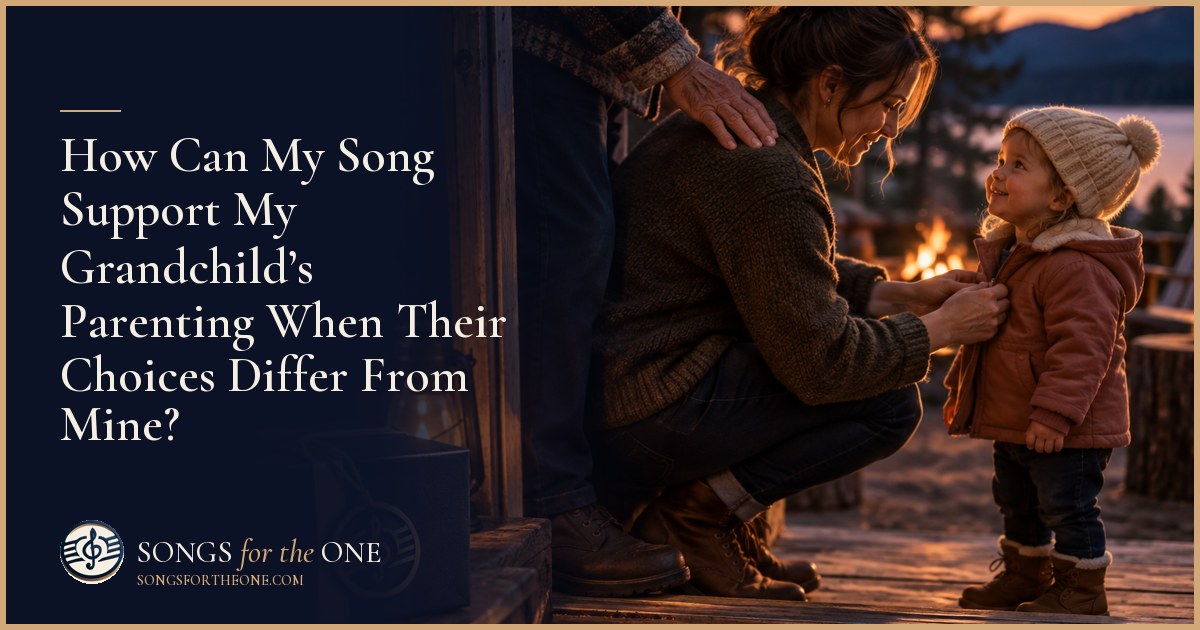
How Can My Song Support My Grandchild’s Parenting When Their Choices Differ From Mine?
· 5 min read · By the Songs for the One team
The short answer
A song supporting your grandchild's parenting expresses trust by celebrating their care rather than judging their methods. Name something you admire, choose a memory that honors their growth, and offer support without conditions. Keep advice, comparisons, and requests out of the lyrics so the gift feels like encouragement.
Key takeaways
- Praise your grandchild’s care and effort, not their agreement with your parenting methods.
- Choose a memory that celebrates growth without claiming credit for it.
- Remove comparisons, predictions, and phrases such as “even though.”
- Keep disagreements and requests for access out of the gift.
- Use the free preview to check the message before buying the full song.
What does support sound like when I would parent differently?
Supporting your adult grandchild does not require pretending every parenting choice feels familiar. You may have different views about bedtime, discipline, food, or how children express feelings. A song can recognize something deeper than those differences: your grandchild is taking responsibility for raising a child, and you want them to feel loved rather than assessed.
The useful distinction is between approving a method and expressing trust in a person. For example, instead of saying, “I agree with everything you do,” you might say, “I see how carefully you think about what your child needs.” That is specific encouragement without a sweeping claim you do not mean. Choose an observation that is genuinely true for you.
Keep the direction of the gift clear. This is a song from you to your grandchild about the parent they are becoming. Your great-grandchild can appear in the memories, but your grandchild should remain the person being addressed. The central message might be, “You do not have to do things my way to have my love.”
Which memories show respect instead of making comparisons?
Choose a memory that lets your grandchild be a capable adult. A recent moment of patient listening, thoughtful preparation, or returning to comfort an upset child can carry more respect than a broad statement about being a wonderful parent. Describe what you noticed without turning it into a scorecard or claiming to know everything about their family life.
For example, if it reflects something you actually witnessed, you could describe your grandchild kneeling beside a frustrated child and waiting while the child found the words. The emotional point is not that their approach is better or worse than yours. It is that you noticed their willingness to stay present during a difficult moment.
A childhood memory can also work, provided it celebrates growth rather than ownership. “I remember your questions, and now I see how closely you listen” connects past and present gently. Avoid “You learned everything from me” or “You finally understand what I went through.” Those lines make their parenting an acknowledgment of your experience instead of a celebration of theirs.
What words should I leave out of the song?
Watch for praise followed by a qualification. “You are a good parent, even though you do things differently” leaves the difference ringing louder than the compliment. So can “I may not understand your rules, but I love you anyway.” Remove the qualification and keep the affection: “I love you, and I see the care you bring to your family.”
Avoid predictions that disguise advice as wisdom. For example, “One day you will see why I was strict” asks the recipient to accept your approach eventually. “Remember that children need boundaries” places an instruction inside the gift. If you want the song to express trust, it should not contain a lesson your grandchild must agree with to receive your warmth.
Also remove requests for visits, photographs, or exceptions to household rules. “Save a little time for me” may sound tender to you but feel like an obligation to the listener. A useful editing test is to ask: Does this line ask my grandchild to change, explain, reassure me, or give me something? If so, it probably belongs in a separate conversation.
Can I acknowledge differences without reopening an argument?
Usually, the song does not need to name the disagreement at all. You can express respect through lines about listening, learning, and remaining available. For example, “I want to know the family life you are building” shows curiosity without identifying a disputed feeding choice or bedtime practice. Being specific about affection does not require being specific about conflict.
If you have already offered unwanted advice, address that directly before giving the song. A private apology might be, “I gave advice when you had not asked for it. I will ask first next time.” Let the song reinforce that commitment rather than perform the apology for you. A musical gift should not require an audience, immediate forgiveness, or a grateful response.
There is also a difference between unfamiliar parenting and a concrete safety concern. A song is not the place to raise a genuine concern about a child’s safety. Address it plainly and separately, seeking appropriate help when necessary. For everyday differences in preference or approach, keep the gift focused on the relationship rather than using it to settle the issue.
How do I explain this message to Muse?
Songs for the One creates original, personalized songs with AI assistance. You choose an occasion, then talk or type with Muse for about 3 to 7 minutes. No songwriting or music skills are needed. Muse gathers five Song DNA elements: The One, The Moment, The Feeling, The Sound, and The Message. You can explore how the process works before starting.
For example, your notes could identify The One as your adult grandchild, The Moment as a quiet instance of care you witnessed, and The Feeling as steady affection and respect. For The Sound, choose a musical style they enjoy. For The Message, try: “I trust you to lead your family. I am here to listen and help in ways you welcome.”
State the exclusions just as clearly: “No parenting advice, no comparisons with my generation, no request for more visits, and no suggestion that they owe me agreement.” You will see story notes showing what Muse understood. Check those notes for the right relationship and emphasis. The finished song uses AI vocals, not your own voice, so your personal contribution is the story and message.
How can I check and share the song without adding pressure?
Listen to the free preview from your grandchild’s point of view. Does the message honor their judgment, or merely praise them for trying? Does a childhood reference make them sound small? Does any line place you above them as the final authority? Review the wording you can see as well. Keep the strongest observation and the clearest expression of love.
The full song is paid, not free. The Song package costs $79 and includes the full song, an MP3 download, a gift page shared by link, a lyrics sheet, and five re-records. You can compare package details and pricing without adding extras. When sharing, remember that anyone with the gift link can open it, so avoid including family details your grandchild would want kept private.
A low-pressure introduction can be enough: “I wanted you to hear how much I respect the care you bring to your family. Listen whenever you have a quiet moment.” There is no need to request a reaction or arrange a public reveal. When you have one honest memory and one clear message, start your song and hear the free preview before deciding whether to buy the full song.
Frequently asked questions
- What if I cannot honestly say I trust every parenting decision?
- You do not need to endorse every decision. Express something you genuinely believe, such as your love, your respect for their responsibility, or your willingness to listen without immediately offering advice.
- Should I include my grandchild’s partner in the song?
- You can acknowledge their partner if it fits the family relationship and your message. Keep your grandchild as the main recipient, and avoid implying that only your side of the family deserves credit for their parenting.
- Can the song include practical offers of help?
- Yes, if the offer is sincere and leaves the choice with your grandchild. For example, “I am here when you want a listening ear” offers support without assuming permission to take over.
- Is a song appropriate after an argument about parenting?
- It can be, but it should not replace a direct conversation or apology. Resolve what you can privately, and give the song without expecting it to end the disagreement or produce forgiveness.
- Should I share the song with the rest of the family?
- Ask your grandchild before sharing it more widely, especially if it includes parenting moments or details about their child. Anyone with the gift link can open it, so a personal presentation gives them more say over who hears it.
Plan your song
Further reading
- Great questions to ask the people you loveStoryCorps
- Friends and family advice for grandparentsAARP
- The science of gratitudeGreater Good Science Center, UC Berkeley