
Grandparents
Can Our Cooperative Gaming Sessions Become a Song for My Grandchild?
· 5 min read · By the Songs for the One team
The short answer
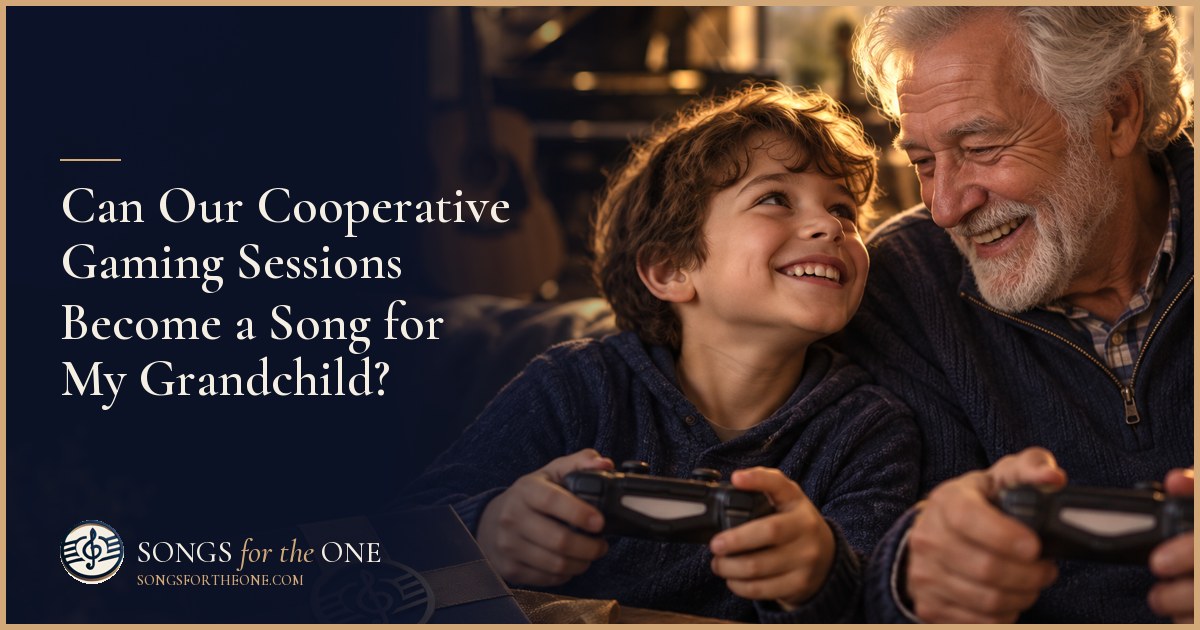
A gaming song for my grandchild can turn cooperative play into a personal message about teamwork and connection. Choose one shared moment, describe how you helped each other, and name what you want your grandchild to hear. The game provides the setting, while your relationship gives the song meaning.
Key takeaways
- Choose one shared gaming moment rather than recounting an entire adventure.
- Describe what your grandchild did that made you feel included, trusted, or proud.
- Keep one or two recognizable game details and explain why they matter.
- Choose a musical style your grandchild would enjoy, then listen to the free preview before buying.
What makes a gaming memory worth turning into a song?
Yes, playing together gives you meaningful material for a song from you to your grandchild. Cooperative games create small moments of trust: someone waits, explains a tricky move, shares a resource, or comes back to help. The song does not need to prove that your session was extraordinary. It needs to show why spending that time together matters to you.
Start by asking what you remember after the game is switched off. Was it the discovery you made together, the way your grandchild stayed calm during another attempt, or the conversation that happened while you explored? For example, you might remember your grandchild saying there was no rush when you wanted to try a new route. That reassurance may carry more meaning than reaching the destination.
Keep the relationship equal and specific. Perhaps your grandchild knows the controls better while you notice patterns, plan supplies, or suggest a different approach. Perhaps you are both experienced players learning something new. There is no need to cast yourself as the confused grandparent. A song can celebrate two capable people who enjoy being on the same team.
Which details should I include without making it a game recap?
Choose one anchor memory and no more than two supporting details. An anchor memory is a short scene you can picture clearly: waiting beside a bridge, rebuilding after a failed attempt, or finally finding the path you had both missed. Supporting details might be your usual Saturday playing time or a little phrase you say before trying again. These help your grandchild recognize the experience without requiring a full explanation.
A useful test is to finish this sentence: “I remember this because it showed me something about us.” For example, a long description of collecting materials and constructing a shelter might become, “You saved a place for me, and we built something neither of us could have made alone.” That is a possible story note, not a required lyric. It moves from the mechanics of play to the reason the memory stayed with you.
Leave out details that only establish sequence: every level, every item, every unsuccessful attempt. Keep a game title or location name if it genuinely helps identify the memory, but explain its significance in ordinary language. If someone unfamiliar with the game could still understand the affection behind the scene, you have probably found the right balance.
How can I thank my grandchild without sounding like a lesson?
Describe what you experienced rather than delivering a character assessment. “I love how we work things out together” sounds like a message between teammates. “You have learned the importance of cooperation” sounds more like a report. Both may come from pride, but the first leaves room for the fun and closeness that made you want to give the song.
Patient explanations deserve particular care. You can appreciate your grandchild's help without making age the punchline or presenting ordinary learning as an embarrassment. For example, you might tell Muse, “They let me try it myself, answered my questions, and celebrated when our plan worked.” That describes respect. You could also mention a moment when your own suggestion helped, so the story reflects what you each contribute.
Decide on one central message before adding more memories. It might be “I enjoy the world we discover together,” “I love being your teammate,” or “Our time together matters to me.” If playful teasing is part of your relationship, keep it affectionate and recognizable. Avoid turning a frustrating mistake, a private worry, or an embarrassing moment into the main feature of the gift.
How do I turn those memories into a song with Muse?
With Songs for the One, you pick an occasion and then talk or type with Muse for about 3 to 7 minutes. Muse gathers the story for an original, AI-assisted personalized song. You do not need songwriting or music skills. The how it works page explains the process, but a few plain sentences about your time together are enough to begin.
Muse gathers five Song DNA elements: The One, The Moment, The Feeling, The Sound, and The Message. For this gift, those could be your grandchild, one shared discovery, the feeling of being a team, a musical style they enjoy, and what you most want them to hear. For example, you might describe exploring together after dinner and realizing that the conversation mattered just as much as the game.
You see story notes showing what Muse understood. Use them to check whether the emotional center is clear. Does the account sound like shared enjoyment, or mostly a list of achievements? Is your grandchild portrayed as a teammate rather than a teacher on duty? Make your preferences explicit, including details you want left out. Ordinary descriptions are useful; you do not have to arrive with rhymes or a chorus.
What should the song sound like, and what will I receive?
Choose a sound your grandchild would welcome, not necessarily something that imitates the game. For example, light, upbeat pop could suit your running jokes and cheerful retries, while gentle acoustic music could fit quiet evenings of exploring and talking. Describe the energy you want as well as the genre. “Warm and playful, with a little lift” gives useful direction without requiring musical vocabulary.
The songs use AI vocals, not your own singing voice, and there is no voice cloning. You hear a free preview before deciding whether to buy; the full song is paid. The core song is made in minutes, although processing time varies. If the gift is tied to a particular date, leave room to listen carefully rather than relying on an exact delivery time.
The Song package costs $79. Every paid song includes the full song, usually about 2:40 to 3:40, an MP3 download, a gift page shared by link, a lyrics sheet, and five re-records. You can compare options on the pricing page. The basic song can carry the message on its own, so choose extras only if they add something you actually want.
How should I share the finished song with my grandchild?
Choose a moment that suits your grandchild's temperament. You might listen together after a gaming session, send the gift link with a short note, or let them hear it privately first. For example, “I made this because I love being on your team” explains the gift without asking for a big reaction. A quieter response does not make the gesture less meaningful.
Be thoughtful about what appears in a shareable gift. Anyone with the gift link can open it, so avoid including account details, private usernames, or anything your grandchild would not want passed along. If you plan to share the song beyond the two of you, ask first. The point is to celebrate your connection, not to turn a private routine into a public performance.
Before you start, write down one scene, one thing you appreciate about your grandchild, and one sentence you want them to remember. That is enough to give the song a clear direction. When you are ready, create a song for your grandchild and listen to the free preview before deciding whether to buy the full song.
Frequently asked questions
- Can I include memories from more than one game?
- Yes, but connect them through one idea, such as discovering things together or always helping each other try again. Choose one main scene so the song does not become a list of games.
- What if we play online rather than in the same room?
- Online sessions can provide equally specific memories. Describe the routine of meeting up, something you said over voice chat, or how playing together helps you stay connected across distance.
- Do I need to know the correct gaming terminology?
- No. Explain what happened in your own words and why it mattered. Include an exact name only when it is important to recognizing the memory, and check its spelling before sharing it.
- Can the song be funny rather than sentimental?
- Yes. Tell Muse you want a playful tone and offer a harmless shared joke or funny moment. Keep the humor mutual rather than making your grandchild's mistake the punchline.
- Can I make a song even if we have never finished a game together?
- Yes. Trying again, wandering off course, or building something unfinished can be the strongest memory. The message can celebrate enjoying each other's company rather than winning.
Plan your song
Further reading
- Great questions to ask the people you loveStoryCorps
- Friends and family advice for grandparentsAARP
- The science of gratitudeGreater Good Science Center, UC Berkeley