
Sports and walk-up music
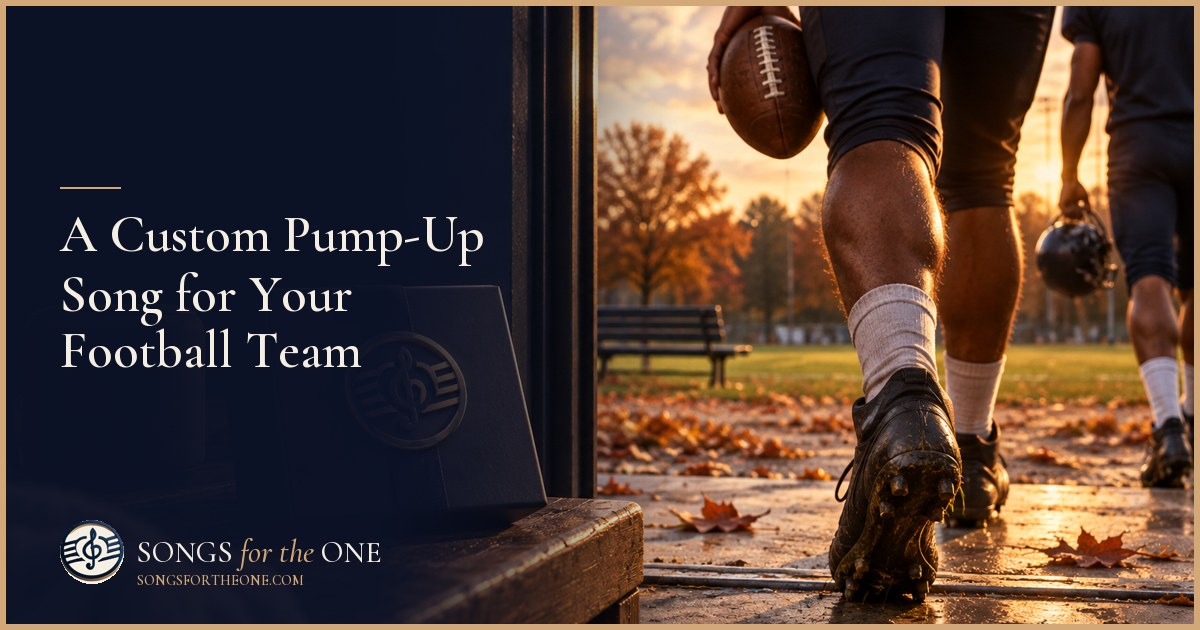
A Custom Pump-Up Song for Your Football Team
· 5 min read · By the Songs for the One team
The short answer
A custom football hype song turns a team name, mascot, and shared memories into an original track for game-week motivation. Build it around a clear message, clean lyrics, and a sound players enjoy. Personal team use is allowed, while ticketed stadium playback, broadcast events, and sponsored content require commercial licensing.
Key takeaways
- Choose one central message, then add the team name, mascot, and a specific shared memory.
- Match the sound to the moment: focused preparation, high-energy practice, or a team celebration.
- Keep youth lyrics clean and check names, pronunciation, and story details before buying.
- Personal team use is allowed; ticketed or broadcast events and sponsored content need a commercial license.
- Hear a free preview first. The full paid song starts at $79.
What makes a football hype song feel like your team?
A strong football hype song gives players something they recognize as theirs. A loud beat can create energy, but the team name, mascot, and a familiar memory give that energy a direction. Start with what the group actually values: finishing a play, trusting an assignment, or showing up for teammates when practice gets difficult.
For example, a hypothetical team called the Cedar Ridge Falcons might build its song around early morning conditioning and the message that every role matters. That is more distinctive than a string of predictions about winning. You do not need a championship season to have material worth including. Consistency, improvement, and the work nobody sees can carry the song.
Keep the emotional target narrow. Do you want players to feel calm and ready, loud and connected, or proud of the season they have shared? Choosing one main feeling helps the song sound intentional. It also gives you a useful test later: does hearing it put the team in the right frame of mind?
Which musical styles work for football game-week motivation?
Choose musical qualities before chasing a particular track. Clean hip-hop with a firm beat can suit a confident locker room mood. Driving rock with strong drums and guitars can provide a more rugged feel. Electronic percussion and a gradual build can work for a focused preparation routine. These are directions to discuss, not guarantees that every player will prefer the same sound.
Ask a few players and a coach what they want the music to do. A song for a team dinner can allow more storytelling than one played before a demanding practice. For example, a hypothetical youth squad might prefer an upbeat, easy-to-follow chorus, while an older team might want a restrained opening that grows into a stronger section.
An existing clean track may be enough when you simply need background energy, subject to the rights for its intended use. An original song stands out when recognition is the point. Hearing a player's name alongside the team name and mascot makes the moment specific. Avoid trying to reproduce a famous song's lyrics or another artist's signature performance.
What details should you give Muse?
Songs for the One creates original, AI-assisted personalized songs for one person. For a football-themed song, that person could be a captain, a graduating senior, or a player whose team is central to their story. You pick an occasion, then talk or type with Muse for about 3 to 7 minutes. No songwriting or music skills are needed.
Muse gathers five Song DNA elements: The One, The Moment, The Feeling, The Sound, and The Message. Prepare a short brief covering who the song is for, the team name and mascot, one meaningful memory, the musical direction, and what you most want that player to hear. You can read more about the process in how it works.
For example, a hypothetical brief could describe a senior linebacker, the Falcons, a rain-soaked practice when teammates kept encouraging each other, energetic rock, and a message about leading through effort. Include pronunciation guidance for unusual names. You will see story notes of what Muse understood, so use those notes to check details rather than assuming every reference came through correctly.
How do you keep the lyrics clean and meaningful?
For youth football, explicitly request clean, age-appropriate lyrics. Describe intensity through effort, preparation, resilience, and teamwork rather than profanity or threats. Confidence does not require insulting another school, targeting an opposing player, or celebrating injuries. A song should still feel appropriate when a parent, younger sibling, or school administrator hears it.
Limit inside references to ones the intended listener will welcome. A familiar practice ritual may be a useful detail; an embarrassing mistake or private family issue usually is not. Before including a teammate's nickname or personal experience, check that they are comfortable with it. For example, a hypothetical team phrase about finishing drills together is safer material than a joke about someone who struggled.
Give the song one message players can remember. A crowded roll call, a season's worth of scores, and several competing slogans can bury the emotional point. If honoring one player is the goal, connect their contribution to the group. If building team energy is the goal, make sure the team identity supports that person's story without turning the song into a list of names.
Where can your team use the finished song?
Personal and team use is allowed for practices, locker room listening, team parties, and unpaid team videos. That makes a song useful for a game-week routine even when it is not part of the public event soundtrack. For example, a hypothetical team could listen during an indoor preparation session or include it in an unpaid season-memory video shared with families.
Stadium PA playback at ticketed or broadcast events and use in sponsored content require a commercial license. Email steve@songsfortheone.com to request one before using the song in those settings. Do not assume that a school event, a short excerpt, or a team account automatically makes a use personal. If sponsors, tickets, or broadcasting are involved, clarify the license first.
A purchase does not transfer copyright or provide royalties to the customer. Also, anyone with the gift-page link can open it, so treat that link as shareable rather than private. Keep sensitive information out of the song and its supporting materials. Before posting team footage, check the team's permission process for showing players, especially minors.
How do you preview, buy, and introduce the song?
Start with the free preview and listen for the essentials: correct names, a suitable sound, clean wording, and the intended message. The full song is paid, not free. The Song package costs $79 and includes the full song, usually about 2:40 to 3:40, an MP3 download, a shareable gift page, a lyrics sheet, and five re-records. Extra re-records cost $2.99 each.
Check the current packages and pricing before choosing extras. The core song is made in minutes, though processing time varies, so leave room to listen and make changes rather than planning around guaranteed instant delivery. Vocals are AI-generated, not the customer's voice, and there is no voice cloning. If you choose a video or streaming option, allow 3 to 5 business days after materials are received; streaming acceptance varies.
Introduce the song at a moment when players can actually hear it, such as a team gathering before practice rather than during instructions. Test the speaker beforehand and keep the volume comfortable. For a song honoring one player, let them hear it before sharing it widely. When you have your names, memory, and message ready, create your song and hear a free preview before deciding whether to buy the full track.
Frequently asked questions
- Can the song include our football team's name and mascot?
- Include the team name and mascot in your conversation with Muse, along with spelling and pronunciation guidance. Check the story notes and preview to see how those details were understood and used.
- Can we play it over the stadium speakers before kickoff?
- Stadium PA use at a ticketed or broadcast event requires a commercial license. Email steve@songsfortheone.com before using it in that setting; the standard purchase covers personal and team use.
- Can we use the song in a team highlight video?
- Unpaid team videos are allowed under personal/team use. Sponsored content requires a commercial license, and you should separately check permissions for the footage and players shown.
- Will the song sound like our captain is singing?
- No. Songs use AI vocals, not the customer's or captain's voice, and voice cloning is not offered.
- Is the whole song free to hear and download?
- No. You can hear a free preview before buying, but the full song and MP3 download are included with a paid purchase. The Song package starts at $79.
- What if a player's name needs correcting?
- Give Muse pronunciation guidance and check the preview carefully. Every paid song includes five re-records, with extra re-records available for $2.99 each.
Plan your song
Further reading
- Great questions to ask the people you loveStoryCorps
- The science of gratitudeGreater Good Science Center, UC Berkeley