
Grandparents
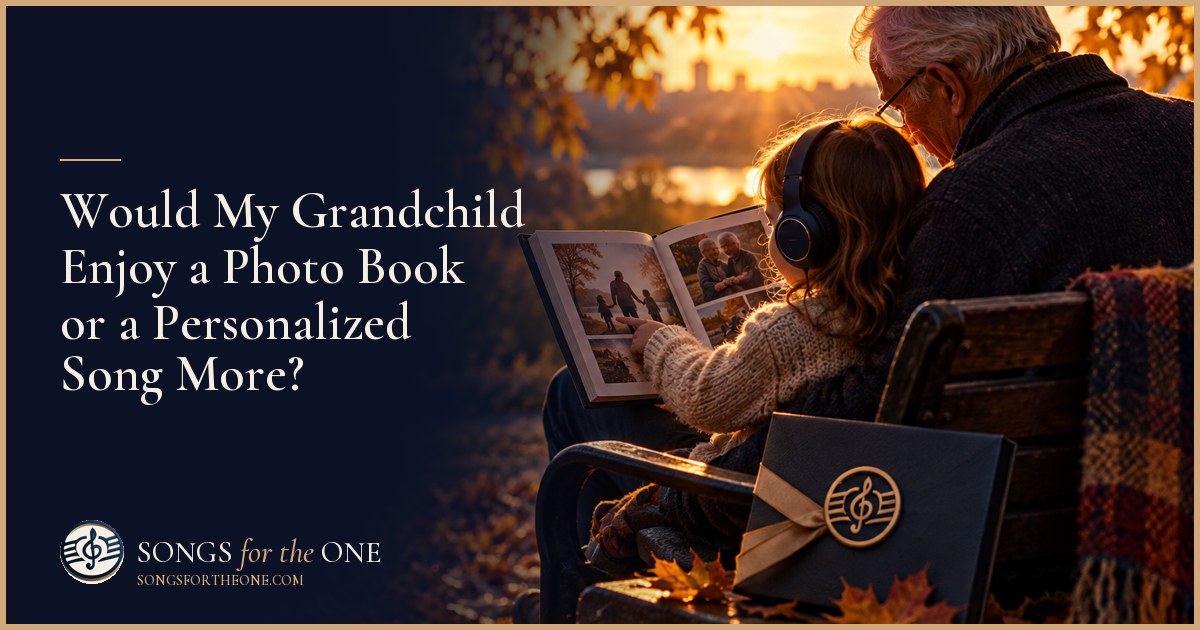
Would My Grandchild Enjoy a Photo Book or a Personalized Song More?
· 5 min read · By the Songs for the One team
The short answer
A photo book or personalized song works best when it matches how your grandchild enjoys revisiting memories. Choose a photo book for looking closely, asking questions, and sharing pictures. Choose a song for listening, singing along, and hearing a meaningful message through music.
Key takeaways
- Choose a photo book when pictures carry the strongest part of your story.
- Choose a song when remembered words, feelings, or shared rituals matter most.
- Notice what your grandchild returns to voluntarily, rather than choosing by age alone.
- Keep either gift focused on a few recognizable details from your relationship.
- Listen to the free song preview before deciding whether to buy the full song.
Does your grandchild revisit memories by looking or listening?
Start with what your grandchild already does for pleasure. Do they turn back to favorite pictures, ask who is standing beside you in an old photograph, or enjoy finding tiny details? A photo book gives them something to explore at their own pace. If they replay favorite tracks, sing during everyday activities, or associate music with particular experiences, a personalized song may fit more naturally.
Age can influence how you present the gift, but it does not settle the choice. A young child might enjoy identifying familiar faces or listening to a repeated musical phrase. An older grandchild might treasure a small book they can keep privately, or prefer a song they can hear through headphones. Their individual preferences matter more than assumptions about their generation.
If you are unsure, ask a simple question without revealing the whole gift: “Would you rather look through pictures of our trips or listen to something made about them?” You can also ask a parent which activities the child returns to willingly. The useful clue is not what gets the biggest first reaction, but what they choose again.
Which memories do you have enough material to tell?
Make a quick inventory before choosing a format. Gather your strongest photographs, then separately write down the moments you remember clearly. These lists may be quite different. You might have dozens of birthday pictures but no photograph of the quiet walk when your grandchild told you something important. A visual record and a remembered story each offer something valuable.
A photo book is a strong choice when the pictures themselves reveal the experience. For example, a hypothetical book about growing tomatoes together could show planting, watering, the first green fruit, and the harvest. Short captions can supply what the photographs cannot, such as what your grandchild named the plant or why one particular afternoon mattered.
A song is worth considering when the most meaningful material is a phrase, a routine, a feeling, or something you want to say. For example, if your clearest memories involve making up names for clouds on the way home, those details can provide a song's story even without photographs. You do not need a dramatic life event to have something specific and worth celebrating.
When is a photo book the better choice?
Choose a photo book when your grandchild enjoys stopping, pointing, comparing, and asking questions. Unlike a song, a page waits for as long as they want to study it. That makes the format especially useful for explaining family relationships, showing how a familiar place has changed, or tracing a shared activity over several visits.
Give the book a clear center rather than trying to document everything. For example, a hypothetical “Saturdays Together” collection could include baking, library visits, and feeding ducks, with one brief memory beside each picture. Arrange it by event or theme, keep faces easy to see, and leave enough space that each page feels inviting rather than crowded.
There are honest practical tradeoffs. Selecting, arranging, and checking photographs takes attention, and a printed book needs somewhere to live. If a substantial book feels unnecessary, a small album, a framed photograph with a handwritten note, or a few labeled prints may do the job beautifully. The value is in helping your grandchild recognize the relationship, not in filling the most pages.
When is a personalized song the better choice?
Choose a personalized song when music is already a welcome part of your grandchild's life and your message is stronger than your photo collection. A song can bring together a memory and what it means to you. Keep the focus on something your grandchild will recognize, rather than a long list of accomplishments or praise that could describe almost anyone.
With Songs for the One, you choose an occasion, then talk or type with Muse for about 3 to 7 minutes. Muse gathers five Song DNA elements: who the song is for, a memory, the feeling, the musical style, and the message you most want heard. You can review story notes showing what Muse understood, and no songwriting or music skills are needed.
The songs are original, personalized, and AI-assisted, with AI vocals rather than your own voice. That distinction matters if hearing you speak is the main appeal. A recorded voice message might be the better alternative in that case. If a musical telling of your story feels right, you can explore how the process works and choose a sound your grandchild actually enjoys.
How can you make either gift easy to enjoy again?
Think about the second use, not just the presentation. A photo book is easier to revisit when it is within reach instead of stored away for safekeeping. A song needs a convenient way to listen. For a younger grandchild, you may want to coordinate with a parent so playback does not depend on the child owning a phone or managing a link.
Every paid Songs for the One song includes an MP3 download, a gift page shared by link, a lyrics sheet, and five re-records. The full song is usually about 2:40 to 3:40. Anyone with the gift link can open it, so avoid including details you would not want others to hear. The basic song package is $79; you can compare the available packages before deciding.
Keep the handover relaxed with either format. For example, you could look at a few pages together and let your grandchild choose where to pause, or listen to the song once without asking for an immediate verdict. Some children respond openly; others prefer to take something in privately. Neither reaction needs to become a test of how much the gift means.
What if both formats feel right?
Use one final question: what would your grandchild most enjoy returning to on an ordinary day? If the answer is faces, places, and visual details, choose the photo book. If it is a familiar musical style carrying a personal message, choose the song. When the answer remains unclear, the format they already enjoy is a sensible starting point.
You can also combine the ideas without turning the gift into a large project. For example, pair a song with one printed photograph from the memory it describes, or add a short handwritten message to a small album. You do not need two elaborate gifts. One clear story, told in a way your grandchild likes, is enough.
If music seems the better fit, gather one memory, one distinctive detail, and one thing you want your grandchild to know. Then start creating their song and hear the free preview before deciding whether to buy. The full song is paid, so the preview gives you a chance to listen before making that commitment.
Frequently asked questions
- Can I make a meaningful photo book with only a few pictures?
- Yes. A small album centered on one shared experience can work well with a few carefully chosen photographs and brief captions. You do not need to fill a large book.
- What if I do not know my grandchild's favorite music?
- Ask them or a parent which styles they currently enjoy, rather than guessing from their age. You can use that guidance when describing the sound to Muse.
- Will the personalized song sound like me singing?
- No. Songs for the One uses AI vocals, not your voice, and does not offer voice cloning. If hearing your own voice is important, consider recording a separate spoken message.
- Can my grandchild listen without having their own phone?
- Yes. An adult can open the gift link or play the included MP3 download on a suitable device. Arrange an easy listening option with their parent or caregiver.
- Can I hear the whole song for free before buying?
- You can hear a free preview before buying, but the full song is paid. The Song package costs $79 and includes the full song, MP3 download, gift page, lyrics sheet, and five re-records.
Plan your song
Further reading
- Great questions to ask the people you loveStoryCorps
- Friends and family advice for grandparentsAARP
- The science of gratitudeGreater Good Science Center, UC Berkeley