
Gift ideas
A Consumable Gift or a Keepsake: Does Meaning Have to Last Forever?
· 5 min read · By the Songs for the One team
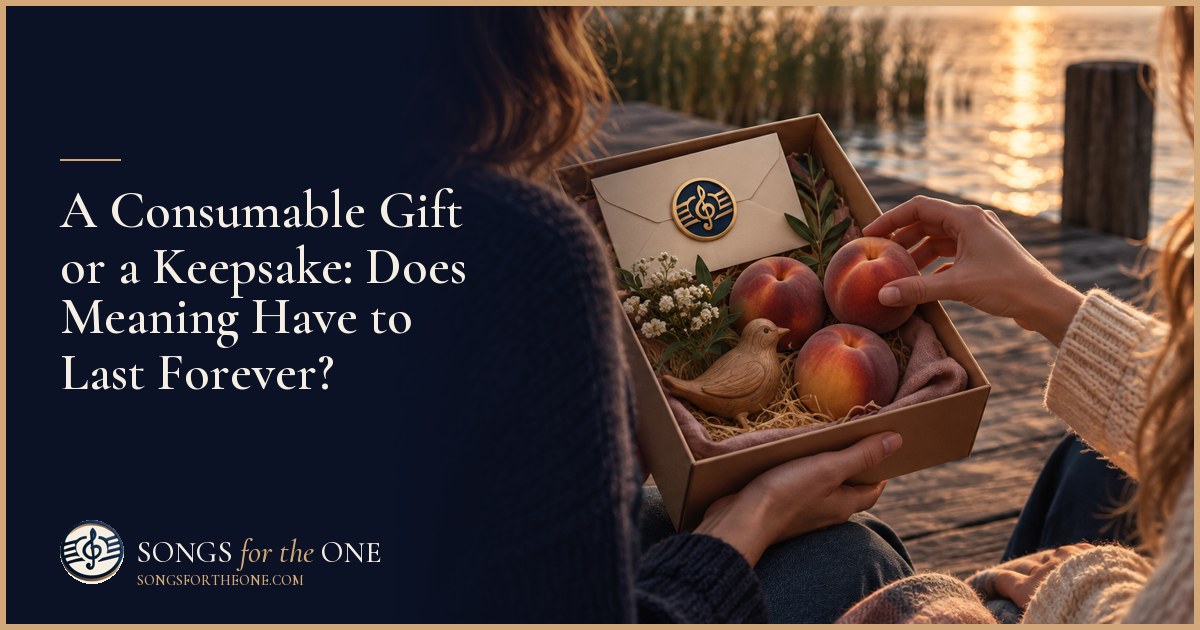
The short answer
Meaning in consumable gifts vs keepsakes comes from fitting the recipient, not lasting forever. Consumables offer enjoyment without ongoing storage, while keepsakes help someone revisit a memory. Match the gift to their preferences, available space, and habits around saving meaningful things.
Key takeaways
- Choose for the recipient’s habits, not your own preference for permanence.
- Check dietary needs, storage demands, and ongoing costs before buying.
- Make a consumable gift personal by explaining why you chose it.
- Offer keepsakes without an obligation to display or preserve them.
- When time is short, check actual availability and delivery requirements.
Does a thoughtful gift need to last forever?
No. A gift can be meaningful because of what happens while someone uses it, not because it survives for decades. A favorite meal can make a difficult week gentler. Flowers can mark a celebration beautifully, then disappear without leaving a storage problem. Their temporary nature does not erase the care behind choosing them.
Keepsakes serve a different purpose. A photograph, a piece of jewelry, or a personal recording can give someone a way to revisit a relationship or moment. That is valuable when the recipient enjoys revisiting things. Permanence alone, though, cannot make an object feel personal, useful, or welcome.
A better question than “Will this last?” is “What will receiving this feel like for them?” For example, someone who loves a clear kitchen counter might appreciate special coffee more than another mug. Someone who saves every birthday card might treasure a small album. Neither person is more sentimental or more deserving of effort.
When is a consumable gift the better choice?
A consumable gift is a strong choice when the person enjoys using things up, has limited space, or already owns what they need. Food, tea, flowers, bath products, and art supplies can all fit, but only if they suit established preferences. “Consumable” should mean something they will enjoy consuming, not something they must find a use for.
Check the details that could turn enjoyment into work. Food requires attention to allergies, dietary restrictions, and expiration dates. Scented products may be unwelcome. A large hamper can overwhelm someone who lives alone. For example, a small box of a favorite bakery’s pastries may suit someone better than a generous assortment containing mostly unfamiliar flavors.
Personalize the selection with a reason. A note such as “These reminded me of our Saturday morning coffee stops” connects an ordinary item to your relationship. If time is short, a familiar local option can be more thoughtful than a complicated order. Confirm pickup hours and availability, then choose an amount the recipient can comfortably enjoy.
When does a keepsake feel welcome rather than burdensome?
A keepsake works best when the recipient already shows you how they preserve memories. Do they frame photographs, wear meaningful jewelry, keep letters, or replay favorite recordings? Notice the format they choose. Someone who keeps a private box of notes may value sentiment deeply without wanting anything new on display.
Think beyond the moment of opening. A large framed print needs wall space. A delicate ornament needs careful storage. An engraved object may feel difficult to pass along even if it is never used. Before buying, ask yourself whether the gift comes with an unspoken assignment to display it, protect it, or explain where it went.
For example, a person who has recently downsized might welcome one loose photograph with a personal note rather than a large photo display. Someone who loves collecting family recipes might appreciate a handwritten recipe card in a size that fits their existing box. The strongest keepsake often belongs naturally in the life they already have.
How can you tell which kind of gift someone wants?
Start with what you know, then ask if needed. Comments such as “I’m trying not to bring more things home” are useful guidance, not a challenge to find an exceptionally meaningful object. Likewise, someone who happily shows you gifts from years ago may be telling you that lasting reminders matter to them.
A direct question can preserve plenty of surprise: “Would you enjoy something to use up, something to do, or something to keep?” You can still choose the specific gift yourself. If asking is impractical, use recent behavior rather than broad labels such as minimalist or sentimental. People can dislike decorative objects and still love handwritten letters.
When you are deciding close to the occasion, compare three things: fit, effort, and feasibility. Does it match their preferences? Will receiving it create work? Can you actually deliver it when intended? For example, an experience voucher may seem clutter-free, but a distant venue or narrow booking window can make it harder to enjoy than a simple meal together.
Can a gift offer lasting meaning without adding physical clutter?
Yes, although digital gifts still need to suit the recipient. A short personal audio message, a carefully selected set of digital photographs, or a shared outing followed by a note can preserve meaning without adding another object. Do not assume digital automatically means effortless: consider whether the person will be comfortable opening, saving, and finding the gift again.
An original, personalized song is another option when the relationship has a memory or message worth returning to. Songs for the One uses an AI-assisted process guided by Muse. You choose an occasion, then talk or type for about 3 to 7 minutes about who the song is for, a memory, the feeling, the musical style, and what you most want them to hear. You can review story notes showing what Muse understood, with no songwriting skills needed. The how it works guide explains the process.
This is a paid keepsake, with a free preview before buying. The Song package costs $79 and includes the full song, an MP3 download, a gift page shared by link, a lyrics sheet, and five re-records. The vocals are AI-generated, not your own voice. Check the package options if this fits your budget. Anyone with the gift link can open it, so choose personal details with that access in mind.
What should you choose when the occasion is close?
Choose the simplest option that genuinely fits, rather than trying to compensate for limited time with size or expense. A consumable gift can work well when you know a favorite and can get it locally. A keepsake can work when you already have the right photograph, memory, or message. A brief, specific note makes either choice clearer: say what prompted the gift and why you thought they would enjoy it.
You can also combine the two without turning one gift into a project. For example, pair a favorite snack with a note about a shared trip, or offer flowers alongside a short recorded birthday message. Let the recipient decide what to keep. The wrapping, container, and even the note do not need to become permanent possessions for the gesture to count.
If a song feels right, the core song is made in minutes, though processing time varies. Video and streaming options take 3 to 5 business days after materials are received, so they need more planning. Start with the memory you want the person to hear, then create a personalized song and listen to the free preview before deciding whether to buy the full song.
Frequently asked questions
- Is it impersonal to give food or flowers?
- No. A specific choice based on someone’s tastes can be highly personal. Include a short explanation of why you chose it, and check dietary needs or flower preferences rather than assuming.
- What if the recipient says they do not want more stuff?
- Take that preference seriously. Consider a favorite consumable, time together, or a digital gift they would actually use, without adding a decorative container they must keep.
- Should I feel hurt if someone does not keep my gift?
- It is understandable to feel disappointed, but keeping an object is not a reliable measure of gratitude. A gift can be appreciated fully without being stored or displayed forever.
- Are gift cards a good alternative to consumables or keepsakes?
- They can be, especially when you know the recipient uses the business but are unsure what they want. Check expiration rules, fees, and whether using the card would require extra spending or inconvenient travel.
- Can I give a personalized song at the last minute?
- The core Songs for the One song is made in minutes, but processing time varies, so instant delivery is not guaranteed. You can hear a free preview before buying; video and streaming options require 3 to 5 business days after materials are received.
Plan your song
Further reading
- Great questions to ask the people you loveStoryCorps
- The science of gratitudeGreater Good Science Center, UC Berkeley